About
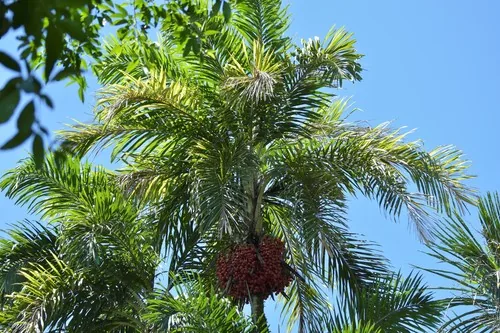
Peach palm is a clustering palm from humid lowland Neotropics grown for starchy hearts (palmito), boiling-grade fruit, and sometimes fodder. It is not a lazy backyard pet: it wants heat, humidity, and steady moisture, and the spines on the trunk are nature's way of saying "wear gloves." In subtropical and tropical Americas you are on the cold edge — treat it as a greenhouse or microclimate gamble, not a sure bet. Full sun to light shade once established; juveniles appreciate some shade in brutal heat. Rich, organic, well-drained but moisture-retentive soil; do not let it dry to cracking in summer. Protect from frost; repeated cold turns enthusiasm into compost. Seeds: clean and sow fresh when warm; germination is slow and erratic — patience is mandatory. Offshoots: some forms sucker; division is possible when crowns are large enough (still spiny, still serious). Fruit is boiled or processed; raw fruit quality varies by population — do your homework before biting.
Permaculture Functions
- Edible: Bactris gasipaes boiled pejibaye fruit delivers dense starchy calories and carotenoids from spine-managed stands -- palm hearts are a lethal-harvest product; only take from cycled individuals where law and tradition already solved the ethics math.
- Animal Fodder: Boiled fruit pulp and mill screenings feed pigs and poultry across Amazonian smallholds after heat softens fibers -- introduce gradually so livestock rumen or crop microbes adapt to oil-rich mash.
- Mulcher: Huge pinnate fronds and spent inflorescence bracts chop-and-drop potassium back onto cacao and banana understory -- wear arm guards because trunk spines mean business on every thinning pass.
- Windbreaker: Clustering stems form a thorny lattice that shreds trade winds across humid lowland alleys while still leaking light to understory -- space clumps so internal airflow prevents rhizosphere anaerobic drama.
- Wildlife Attractor: Orange-red fruit bunches feed toucans, monkeys, and pigs if sanitation relaxes -- net outer stems near houses or accept shared harvests with frugivores that already know the smell.
Companion Planting
Also mentioned as companions:
- Inga
Not yet profiled in PermiePortal
- Cold, dry winds
- Poorly drained stagnant muck
Threats & Pressure