About
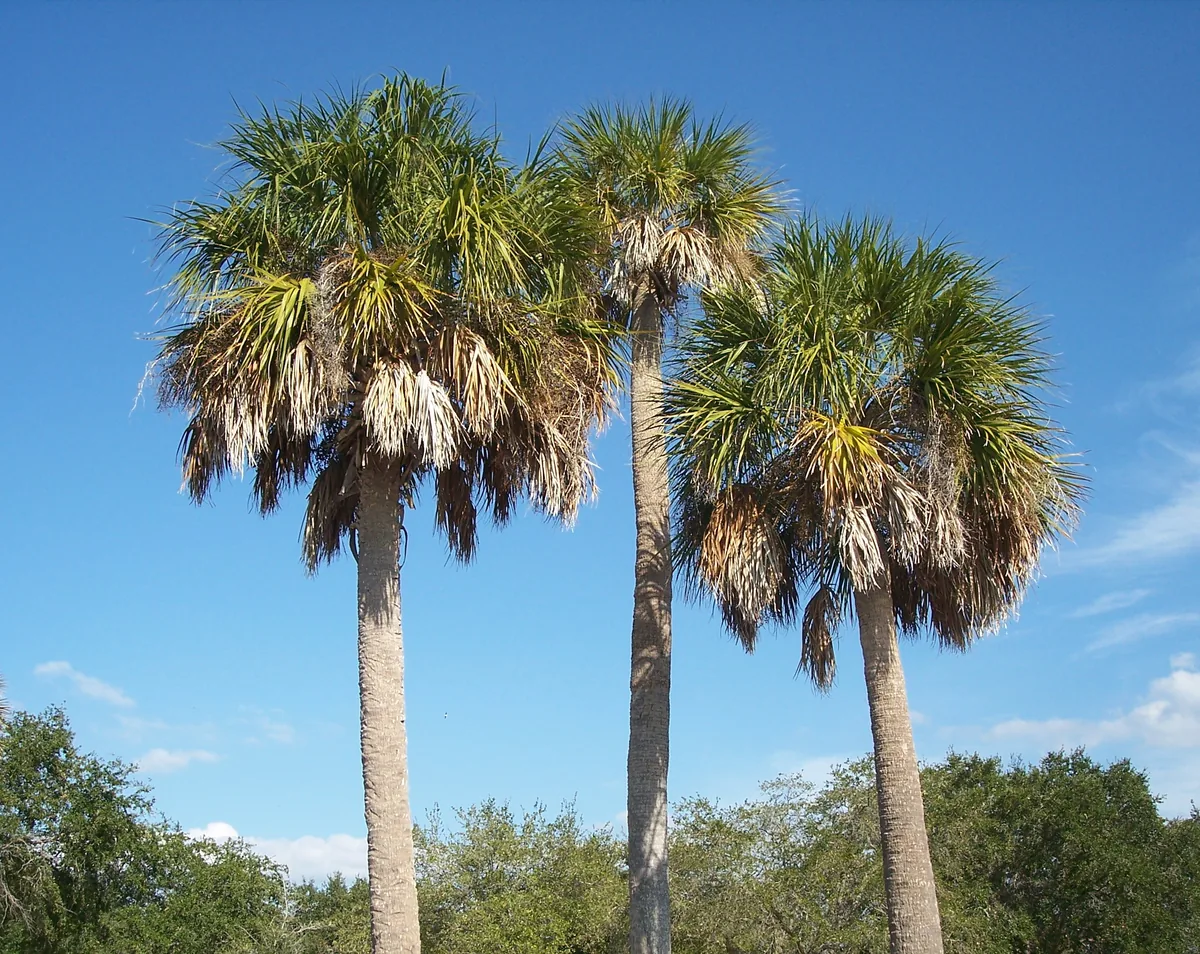
Cabbage palm (Sabal palmetto) is the iconic fan palm of subtropical coasts and lowlands, forming a single trunk topped with large costapalmate leaves and heavy sprays of black fruit. Heights of 30–50 feet (9–15 m) are common in open settings; boots of old leaf bases linger on trunks until they shed. Young hearts were historically eaten as survival food at unsustainable harvest cost—modern landscapes value the species for canopy structure, storm resilience, and wildlife food, not heart-of-palm fads on wild trees. Full sun to light partial shade; establishment faster with irrigation in dry districts. Tolerates sandy, salty air and periodic inundation; still needs drainage for long-term root health. Mulch young trunks to reduce weed competition; avoid piling mulch against the growing point. Sow seed in warm, humid conditions; germination is slow but reliable with patience. Transplant young palms with as much root ball as logistics allow. Remove only dead fronds; green fronds are still feeding the crown. Do not harvest terminal buds from landscape or wild palms—killing the meristem ends the tree. Collect fallen fruit for wildlife feeding stations or seed propagation where ethical. Schedule professional trimming only when dead material creates hazard, not for cosmetic anxiety.
Permaculture Functions
- Edible: supplies black fruit pulp and seeds as minor food after ethical collection from the ground -- terminal bud harvest kills the palm and is not a landscape strategy.
- Wildlife Attractor: Heavy fruit clusters feed birds, mammals, and insects -- along subtropical and tropical coasts after fruits ripen and drop.
- Ornamental: Costapalmate fronds and a tall single trunk give a recognizable subtropical silhouette -- for public plantings and food-forest canopy.
- Windbreaker: fronds flex in wind rather than snapping like rigid broadleaf canopies, buffering gusts -- along exposed edges once the trunk matures.
- Mulcher: sheds old fronds and boots on its own schedule -- returning fibrous litter that mulches the dripline and builds organic matter at the soil surface.
Companion Planting
- Improper 'hurricane cuts' — removing green fronds weakens palms and invites pests
Threats & Pressure