About
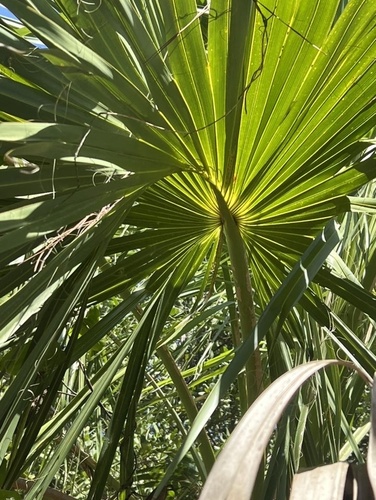
Sabal palmetto is the icon that says 'you are definitely in the Southeast.' Slow, tough, hurricane-flexible, and deeply wired into coastal and inland ecosystems. The terminal bud was historically eaten as 'swamp cabbage' — harvesting kills the tree, so treat that as history-class trivia, not lunch planning. Native backbone species for pine savanna, hammocks, and food forest edges in its range. ☀️💧 Sun and Water Requirements: Full sun to part shade once established. Tolerates wet feet and droughty sand better than most ornamentals pretending to be low-maintenance. Transplant 'sabal minors' carefully; large specimens hate root disturbance. ✂️ Propagation: Seeds: slow but straightforward; clean flesh, warm stratification optional, patience mandatory. Transplant nursery-grown specimens for landscape speed. 🌾 Harvest / Best Use Timing: Do not harvest the heart unless you dislike the tree. Use fallen boots / fronds for mulch and habitat.
Permaculture Functions
- Wildlife Attractor: Flowers and fruit feed broad food webs including insects and birds.
- Erosion Control: Fibrous roots stabilize sandy, wet, or coastal soils.
- Windbreaker: Flexible canopy weathers storms better than brittle exotics.
- Edible: Historical heart-of-palm use kills the tree—treat terminal bud harvest as ethics class, not lunch planning; plan for palmetto weevil drama on stressed palms.
Practitioner Notes
- Morning picks hold turgor; afternoon heat steals shelf life even if the cooler feels honest.
- Watch the plant’s own signals first—catalog zone numbers do not replace your site’s microclimate truth.
- Sharp tools and clean cuts beat torn stems; disease spores love frayed tissue more than rhetoric.
- Harvest texture changes faster than color—nip one sample before you commit the whole row to a pick date.
Companion Planting
- Saw Palmetto
- Beautyberry
- Muscadine
- Yucca
- Wounding trunks with string trimmers — weevil invitation letters
- Expecting fast shade — this is a long game
Pest Pressure