About
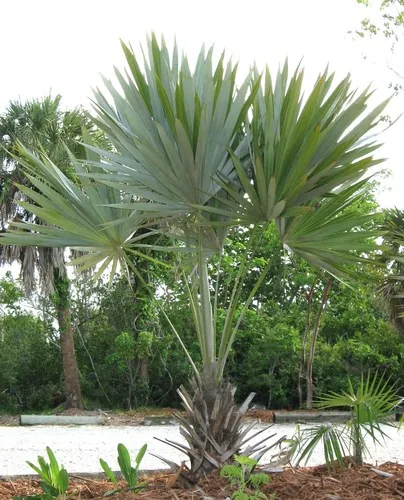
Key thatch palm (Leucothrinax morrisii), formerly placed in Thrinax, is a medium fan palm of coastal rock and sandy keys in subtropical islands, forming a slender trunk and green palmate leaves adapted to salt breeze. Heights often reach 15–25 feet (4.5–7.5 m). It suits coastal landscapes, parking islands, and tropical food-forest edges where drainage is sharp and frost visits are rare insults. Full sun for compact habit; young plants tolerate light shade. Extremely well-drained, often calcareous soils; tolerates salt spray and short drought after establishment. Avoid chronically wet root pits inland. Sow fresh seed warm; germination is slow like most palms. Transplant young specimens with intact root balls. Remove only fully brown fronds—green leaves still feed the crown. Thatch use is specialized—avoid overharvest that stresses palms. Landscape peak is year-round structure; seasonal fruit drop may occur—site pathways outside the splat line. Inspect spear growth after cold events.
Permaculture Functions
- Ornamental: Leucothrinax morrisii forms slim trunks with stiff palmate fans that read Keys-native without coconut scale -- site in full sun on limestone sand so crowns stay compact.
- Wildlife Attractor: Cream inflorescences feed native bees and beetles while black drupes feed localized birds -- expect seasonal fruit drop; plan walks outside the splat line.
- Fiber: Tough fan segments historically roof chickee huts -- harvest sparingly from landscape specimens; overstripping fronds stresses palms already dealing with salt and drought.
- Border Plant: Massed clumps edge dune walks and parking islands -- spacing matters because mature fans overlap sidewalks when planners forget crown spread.
Companion Planting
- Hard frost — marginal outside tropical keys; protect juveniles during unusual cold
- Poor drainage inland — rot follows vanity plantings in clay saucers
Threats & Pressure