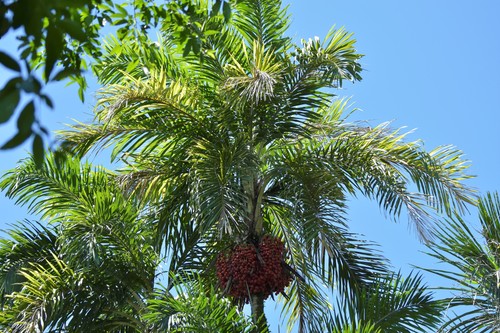
About
Same beast as “peach palm,” Latin-first label edition: clustering palm from humid lowlands, spiny juvenile trunks, starchy fruit you boil before pretending it is a snack apple. subtropical and tropical Americas is the skeptical zone—heat and humidity yes, sustained cold no. Greenhouse tourists and brave coastal 10b growers only, unless you enjoy replacing palms like socks. ☀️💧 Sun and Water Requirements: - Full sun to light shade once established; juveniles like some shade in peak heat. - Rich, organic, well-drained but moisture-retentive soil; do not drought-stress during fruit fill. ✂️ Methods to Propagate: - Seeds: clean, sow fresh warm; germination slow—start many seeds if you are impatient. - Offshoots on some forms; division when crowns are big enough for gloves and therapy. 🌾 Harvest notes: - Fruit is processed by boiling or fermenting traditions—raw quality is not the point.
Permaculture Functions
- Edible: Boiled fruit and palm heart where ethics, law, and rotation allow.
- Animal Fodder: Traditional use of boiled fruit and by-products for stock.
- Mulcher: Fronds chop-and-drop into humid guilds.
- Windbreaker: Clumping barrier in tropical systems.
- Wildlife Attractor: Ripening fruit feeds birds and mammals where management permits.
Practitioner Notes
- Spines on trunk and leaf bases are real—avenue planting without protective wrap is how neighbors learn new vocabulary.
- Starchy palm hearts and cooked fruit uses are cultural and varietal—never assume every seedling is dessert-grade out of hand.
- Clustering trunks widen with age—original spacing that looked generous becomes a corral in a decade.
Companion Planting
- Banana
- Cacao
- Inga
- Cold, dry winds inland
- Stagnant anaerobic muck
Pest Pressure