About
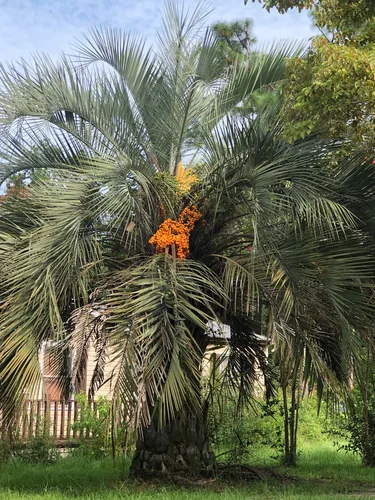
Jelly palm is the cold-hardier Butia crowd favorite for "actual fruit, not just landscaping lies." Yellow-orange fruits are sweet-tart and messy — plant it where falling pulp will not paint your Prius. Trunk is stout, slow, and serious; this is not a rental-apartment houseplant. subtropical and tropical Americas 8b microclimates grow it with mulch and patience; younger plants need frost protection during insult winters. Full sun for best flowering and fruit; juvenile plants appreciate light shade while roots expand. Well-drained soil; tolerates drought when established but fruits better with summer moisture. Avoid chronic bog — palms rot roots and blame you in silence. Seeds: clean pulp, sow warm; germination is slow — think palm time, not radish time. Patience: select mother trees with good fruit if you start from seed. Jelly Palm: harvest fruit when fully colored and aromatic -- underripe jelly fruit stays stubbornly starchy. Use pole baskets or hooks on tall trunks; ripe heads bruise if they free-fall onto concrete morality plays. Pulp ferments fast -- process within a day or two, or freeze puree in flat bags for later.
Permaculture Functions
- Edible: Butia odorata yields apricot-sized yellow fruit with sweet-tart pulp high in pectin -- boil into jelly or wine, and pit carefully because fibrous flesh clings to seeds.
- Ornamental: Blue-gray pinnate fronds and stout solitary trunks read resort-tropical in 8b microclimates -- slow growth rewards patience more than impulse big-box palms.
- Wildlife Attractor: Falling fruit ferments fast and draws raccoons and wasps -- site away from parked cars and harvest promptly if you dislike purple concrete splats.
- Windbreaker: Low head of stiff fronds knocks wind below eye level in mixed fruit rows -- interplant with taller broadleaf windbreaks because palms alone do not stop hurricane fetch.
Companion Planting
Also mentioned as companions:
- Citrus
Not yet profiled in PermiePortal
- Dark shade and wet feet
- Planting under eaves where fruit stains concrete
Threats & Pressure