About
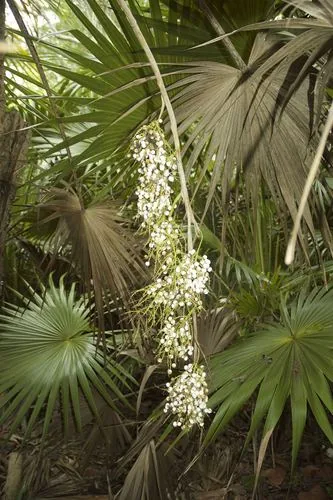
Florida thatch palm (Thrinax radiata) is a medium fan palm of coastal tropical hammocks and limestone substrates in the Caribbean basin and parts of southern peninsular Florida, forming a slender gray trunk topped with green palmate leaves. Height commonly reaches 20–30 feet (6–9 m) in open conditions. Historically used for thatch and crafts, it now anchors wind-tolerant landscaping, parking islands, and coastal food-forest edges where salt breeze is part of the contract. Full sun once established; young plants tolerate light shade during establishment. Well-drained soils, including limestone and sandy coastal profiles; tolerates salt spray better than many broadleaf trees. Irrigate regularly during root establishment; reduce as the crown lifts and roots explore. Sow fresh seed in warm humid conditions; germination is slow and variable—plan for nursery patience. Transplant with intact root balls; minimizing root damage improves survival. Remove only fully brown fronds; green leaves still feed the palm. Thatch harvest is specialized and can stress palms if overcut—learn traditional timing if pursuing fiber. Landscape maintenance peaks before hurricane season when dead material becomes projectile humor. Watch spear growth after cold events before writing off a specimen.
Permaculture Functions
- Ornamental: Thrinax radiata palmate silver-green fans on slim gray trunks read restrained tropical beside Brahea clutter near salt-sprayed Keys driveways -- where coconut height would break sight triangles you already engineered for code compliance.
- Wildlife Attractor: Panicles of small ivory flowers and bird-dispersed drupes engage generalized coastal wildlife without coconut rat-habitat volume on small lots sized -- for single-trunk hammock palms instead of Cocos drama.
- Fiber: Traditional Keys thatch uses old gray frond fiber when harvest timing respects carbohydrate drawdown on living crowns -- modern crafters braid cordage from ethically thinned fans after hurricane season removes brown sails anyway.
- Border Plant: Single trunks line limestone paths where foot traffic needs visibility -- without wide-spreading surface roots buckling pavers like Ficus microcarpa hedges you already ripped out twice on the same walk score.
Companion Planting
- Hard frost — tissue damage on marginally hardy sites; protect juveniles during rare cold events
- Nutrient deficiencies on pure limestone — watch for persistent chlorosis patterns, not one-off yellow leaves
Threats & Pressure