About
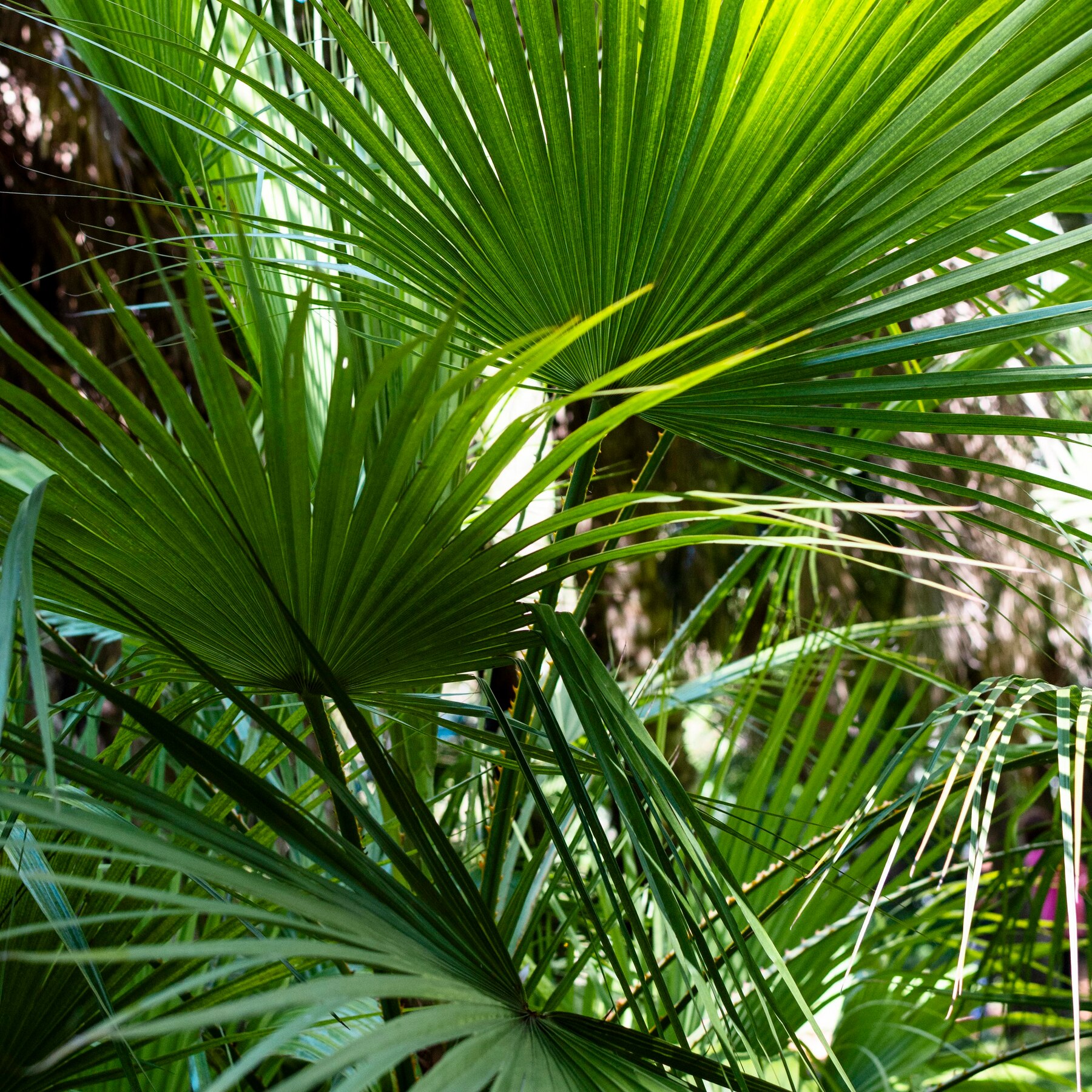
The Palmetto Palm (*Sabal palmetto*), also known as the Cabbage Palm, is native to the southeastern United States. It can reach heights of up to 20 meters (65 feet) with a sturdy trunk and a canopy of fan-shaped fronds. The tree produces small, white flowers that develop into black drupes. 🌞💧 **Sun and Water Requirements:** Prefers full sun but can tolerate partial shade. Highly drought-tolerant once established but benefits from regular watering during prolonged dry periods. ✂️🫘 **Methods to Propagate:** Propagation is primarily through seeds, which should be cleaned and planted in moist soil. Germination can take several months. 🧑🌾👩🌾 **When to Harvest:** The terminal bud, known as the "cabbage," can be harvested for consumption, but this process kills the tree. Berries can be collected when ripe for propagation or wildlife feed.
Permaculture Functions
- Edible: The terminal bud is edible and known as "heart of palm."
- Medicinal: Used traditionally to treat headaches and fever.
- Wildlife Attractor: Provides food and habitat for birds and other wildlife.
- Windbreaker: Its sturdy structure makes it effective in reducing wind speed in landscapes.
- Erosion Control: The root system helps stabilize soil in coastal areas.
Practitioner Notes
- Harvest texture changes faster than color—nip one sample before you commit the whole row to a pick date.
- Label jars with plant part and date the day you seal—future you is not psychic.
- Sharp tools and clean cuts beat torn stems; disease spores love frayed tissue more than rhetoric.
- Overfertilized fast growth dilutes flavor and invites sap feeders—lean soil often tastes more like itself.
Companion Planting
- Live Oak
- Pine
- Wax Myrtle
- Saw Palmetto
- Yaupon Holly
Pest Pressure