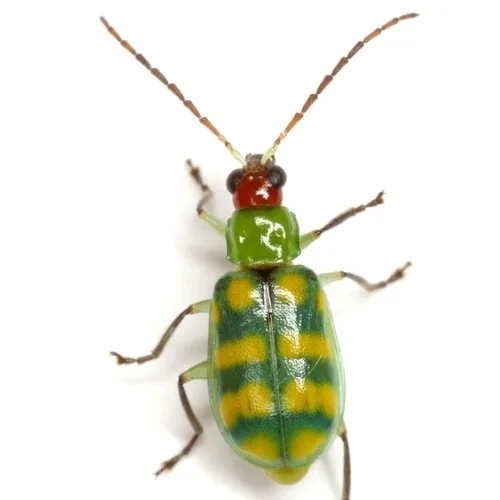
Field Identification
If new growth is curling, yellowing, sticky, or chewed, banded cucumber beetle may already be on the plant. This pest often builds quietly, then damage appears all at once. Feeding stress weakens growth, reduces yield, and opens the door to secondary disease. Early cleanup is much easier than fighting a full population surge later.
Inspect the newest growth first: leaf undersides, flower buds, stem joints, and tender tips where pests gather. Look for body shape, color, eggs, cast skins, honeydew, webbing, or fresh puncture marks. A hand lens and a white paper tap test help reveal small life stages. Matching visible pests with fresh plant damage confirms active infestation.
Not sure what you have? Use the symptom diagnosis tool →
How to Deal With It
Organic Control Methods
Beneficial nematodes (Heterorhabditis bacteriophora) applied to soil in spring target overwintering larvae and pupae in the soil — apply when soil is above 60F (15C) and keep moist for 2 weeks. Ground beetles are important predators of larvae and eggs in soil — permanent mulch and ground cover nearby supports them. Braconid wasps parasitize larvae. The banded cucumber beetle also transmits bacterial wilt disease on contact — a single beetle can infect a plant in one visit, so prevention matters more than control after damage begins.
The banded cucumber beetle vectors bacterial wilt — prevention is more important than control. Row covers from transplant until flowering completely exclude beetles during the most vulnerable period. Use transplants rather than direct seed — larger plants tolerate feeding better and you gain protection time under cover. Check plants daily in early summer when adults first emerge. Blue Hubbard squash as a trap crop at bed edges concentrates beetles for destruction.
Delay planting 2-3 weeks later than normal — adult beetle pressure drops significantly after the early-season emergence peak. Rotate cucurbit beds at least 100 feet from previous year locations — adults overwinter in field edges near last year's crop. Interplant with radishes, nasturtiums, and catnip which deter cucumber beetles. Remove and destroy crop residues immediately after harvest to eliminate overwintering habitat.
Row covers until first female flower are the most effective physical control. Yellow sticky traps at plant height monitor adult populations. Vacuum plants in early morning when beetles are sluggish. Beetles drop when disturbed — shake plants over a sheet and collect. Hand-pick egg clusters from soil surface near plant bases in early summer.
Kaolin clay on leaf surfaces deters feeding and egg-laying without harming beneficials — apply every 7 days and after rain, coating new growth thoroughly. Neem oil disrupts beetle feeding and egg-laying — apply weekly as prevention. Spinosad targets larvae effectively as a soil drench in spring — apply when soil temperatures reach 60F (15C). Pyrethrin provides quick knockdown on adults but harms all insects and y at dusk, never near open flowers.
Let Nature Handle It
Natural Enemies
- Beneficial Nematodes
- Ground Beetles
- Braconid Wasps
Threat Map