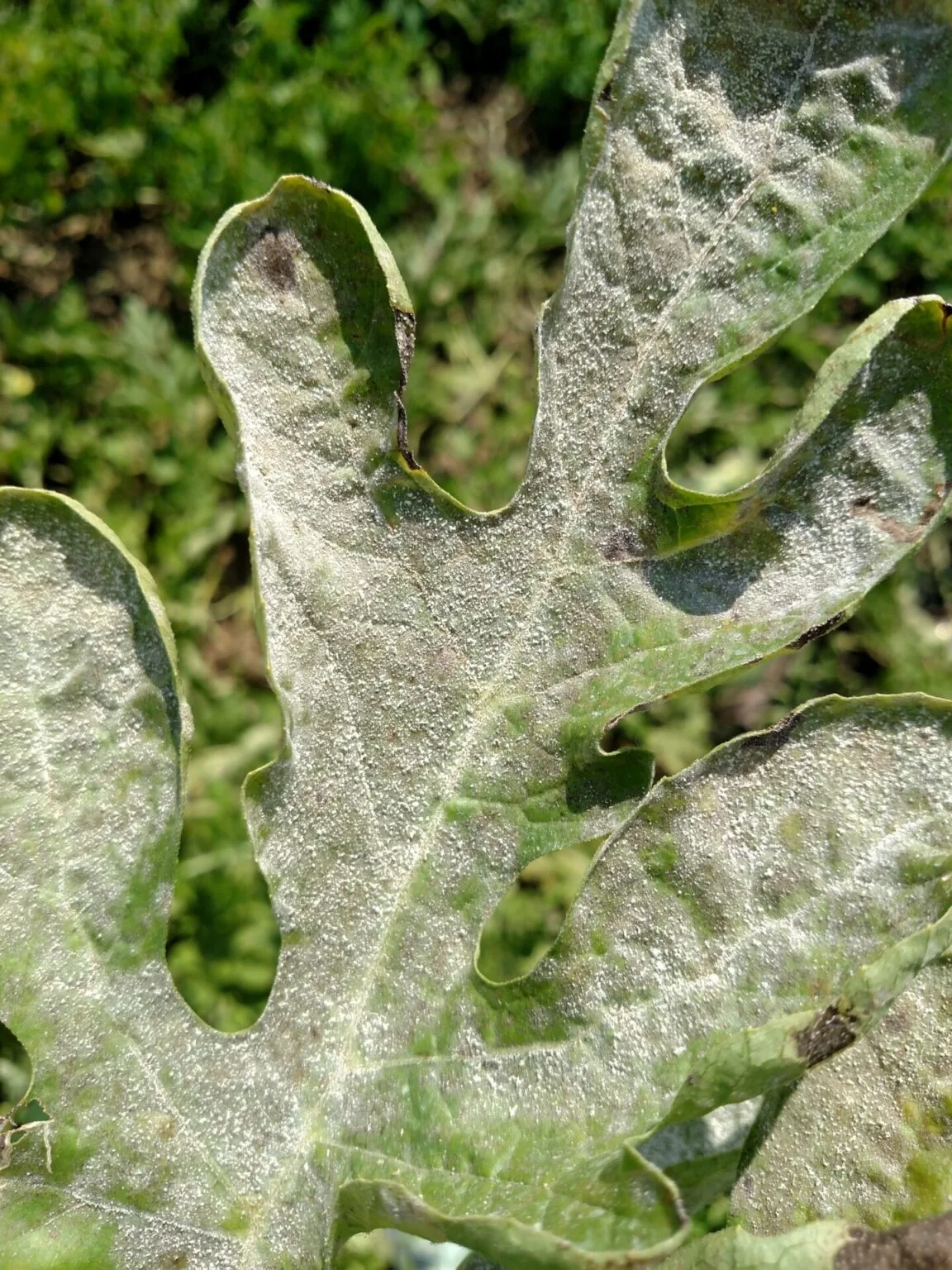
Field Identification
If leaves, stems, or fruit suddenly look spotted, sunken, or rotting, powdery mildew may already be active. This problem often starts small, then spreads across healthy tissue before most growers realize how serious it is. Warmth, moisture, and crowded foliage usually speed it up. Treat early, because waiting even a few days can turn a manageable infection into major crop loss.
Look for a pattern, not one bad leaf: expanding spots, dark or pale halos, fuzzy growth, or tissue that collapses when touched. Check both leaf surfaces, stem bases, and fruit scars where symptoms first appear. New lesions after rain, overhead watering, or heavy dew are a strong clue. When separate spots begin merging into larger dead patches, the disease is advancing quickly.
Not sure what you have? Use the symptom diagnosis tool →
How to Deal With It
Organic Control Methods
Bacillus subtilis (Serenade) colonizes leaf surfaces and produces compounds that suppress powdery mildew spore germination — apply preventively before symptoms appear or at first sign of infection. Ampelomyces quisqualis is a hyperparasitic fungus that parasitizes powdery mildew directly — available in some commercial formulations. A healthy phyllosphere (leaf surface microbial community) naturally suppresses powdery mildew. Avoid broad-spectrum fungicides that sterilize leaf surfaces and eliminate beneficial competing microbes.
Powdery mildew is unique — it thrives in warm dry weather with high humidity but does NOT need wet leaves to spread. Spores germinate on dry surfaces. Poor air circulation is the primary driver — cr air are always highest risk. Excess nitrogen produces the soft succulent growth mildew colonizes most easily. Once you see white powdery coating on leaves the infection is established — act immediately as it spreads rapidly by wind.
Prune for air circulation — remove inner branches and crowded growth that prevents airflow. Space plants according to their mature size, not their transplant size. Choose resistant varieties when available — breeders have developed mildew-resistant squash, cucumber, melon, and rose varieties that eliminate most management. Remove and bag infected leaves — do not compost, as spores survive. Avoid evening overhead irrigation which raises humidity without washing spores off.
Remove infected leaves at first sign and bag immediately — mildew spreads by airborne spores and removing infected material reduces the spore load. A baking soda solution (1 teaspoon per quart water) changes leaf surface pH and kills spores on contact — less effective than purpose-made sprays but freely available. Milk diluted 1:9 with water has documented efficacy against powdery mildew in multiple studies — spray weekly on foliage.
Sulfur fungicide is the most effective organic spray for powdery mildew — apply every 7-10 days starting before symptoms appear in susceptible crops. Do not apply when temperatures exceed 90F (32C) as it causes leaf burn. Potassium bicarbonate (Kaligreen) raises leaf surface pH and kills spores immediately on contact — more effective than baking soda at lower rates. Neem oil disrupts spore germination — mix 1 tablespoon neem plus 1 teaspoon castile soap per quart warm water, apply weekly. Rotate between sulfur, potassium bicarbonate, and neem to prevent resistance buildup.
Let Nature Handle It
Natural Enemies
- Beneficial Fungi
- Antagonistic Bacteria
- Competitive Microbes
Threat Map