About
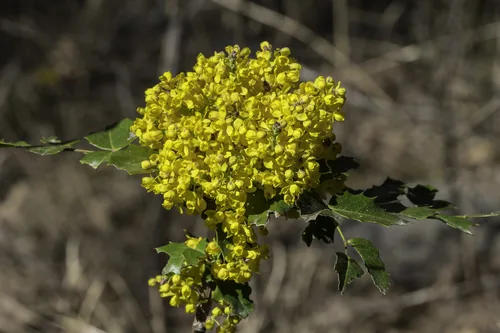
Oregon grape (Berberis aquifolium) is an evergreen, holly-ish shrub with compound, spiny leaflets, bright yellow early-spring flowers, and dusty-blue berries with a tart pucker that educates children about honesty. Plants range from low mounding forms to 6-foot thickets depending on cultivar and site; they prefer woodland edges with organic mulch, not parking-lot heat islands. subtropical and tropical Americas: Treat as a northern ornamental experiment in shade and acidic, well-drained soil; humid lowland heat can bring foliar drama—airflow and avoiding shearing wet foliage reduces fungal gossip. Part shade to full shade in hot climates; cool regions tolerate more sun if roots stay cool and moist. Medium moisture; drought-tolerant once established but not a desert mascot; improve organic matter. Semi-hardwood cuttings in late summer under humidity; bottom heat speeds rooting if your house is emotionally cold. Seed requires cleaning and stratification for many lots; expect variability—berberis genetics enjoy surprises. Berries when fully blue with a bloom, after flavor shifts from insult to usable tart; process into jelly or ferment if your palate is brave. Bark and root harvesting for traditional use stresses plants—rotate patches, never strip a single individual like a corporate raider.
Permaculture Functions
- Edible: Glaucous Berberis aquifolium berries run so tart they read as lemon-pectin bombs best in jelly, shrub syrups, or fermented spreads once fully blue-waxy ripe -- out-of-hand eating educates children about honesty and sugar balance.
- Medicinal: Berberine-rich root bark appears in Pacific Northwest antimicrobial protocols with legal harvest limits -- internal dosing belongs with trained practitioners because berberine crosses placenta and interacts with multiple pharmaceuticals.
- Wildlife Attractor: Yellow racemose flowers open before many forest-floor competitors, feeding early mason bees and hoverflies -- dusty-blue fruit feeds robins and waxwings after you pick human share or net canes.
- Border Plant: Holly-like evergreen leaflets on spiny stems make living fence along paths where you want deer to detour -- shear after fruit if you need tidy sight lines without removing all bird food.
- Pest Management: Dense armored foliage physically blocks deer browse on adjacent soft herbs -- still combine with motion or dog pressure because hungry ungulates sometimes test spines when snow limits options.
Companion Planting