About
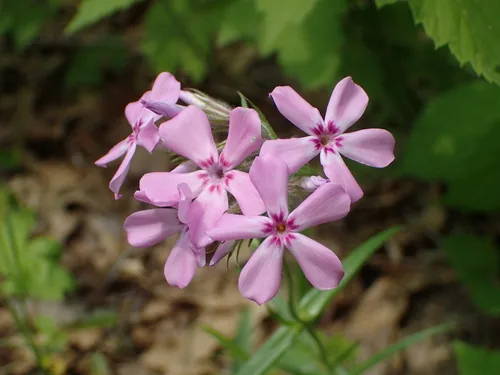
Prairie phlox (Phlox pilosa) is a clump-forming perennial of North American prairies and open woods, bearing clusters of fragrant pink to lavender flowers in late spring and early summer atop stems usually under 2 feet (60 cm). Narrow leaves are softly hairy, giving a gray-green haze at ground level. It excels in sunny borders, meadow strips, and any garden that wants long-tongued pollinator service without importing neon annuals. Full sun to light partial shade; bloom count drops in deep shade. Average, well-drained soils are ideal; tolerates lean prairie soils and short drought once established. Avoid wet clay that rots crowns; mulch lightly to keep roots cool in hot summers. Divide clumps after flowering or in early fall; replant promptly. Sow seed with light press into soil—some populations need cold-moist stratification. Pinch early tips if you want bushier cushions before bloom. Cut flowers in the morning for short vases when half the cluster is open. Deadhead lightly if self-sowing is unwelcome near paths. Peak bloom follows local late-spring warmth, often after last frosts near 28°F (-2°C).
Permaculture Functions
- Pollinator: Phlox pilosa salverform clusters feed pipevine swallowtails, sphinx moths, and long-tongued bees during late-spring windows -- morning light shows nectar guides; evening perfume pulls hawkmoth shifts.
- Ground Cover: Hairy gray-green clumps knit between little bluestem bunches without mint-style stolon rampage -- divide every few years when centers go woody and flower count drops.
- Ornamental: Pink-lavender cushions read softer than neon annual flats in designed meadow strips -- powdery mildew shows on crowded humid nights, so give wind slots between clumps.
- Wildlife Attractor: Night fragrance supports hawkmoth pollination syndromes while diurnal bees still work open faces -- leave a few seed heads if you want finch snacks, deadhead walkways if self-sowing annoys pavers.
Companion Planting
- Powdery Mildew — improve airflow; avoid evening overhead watering
- Over-fertilization — lush foliage, fewer flowers, same old story