About
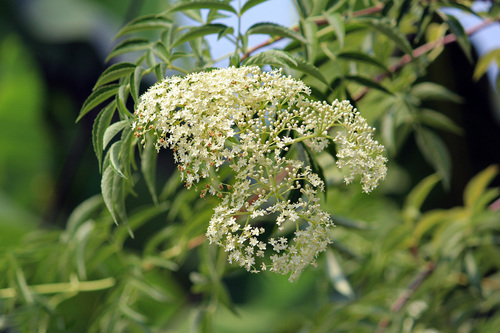
European elder (Sambucus nigra) is a fast-growing deciduous shrub to small tree widely cultivated for flat white flower umbels and clusters of dark purple-black berries used in syrups, wines, and preserves where processing traditions are respected. Named cultivars vary in vigor, leaf color, and fruit chemistry; wild-type seedlings are a lottery. Plants often reach 8–15 feet (2.5–4.5 m) and spread by suckers into hedgerows that birds endorse. ☀️💧 Sun and Water Requirements: Full sun to partial shade; heaviest flowering and fruiting with strong light. Fertile, moist, well-drained soils are ideal; tolerates heavy soils if drainage moves. Mulch to reduce grass competition; deep watering during establishment speeds early growth. ✂️ Propagation: Hardwood cuttings in dormancy root readily under humidity. Sow stratified seed for diversity, not named clones. Prune out old, weak canes after fruiting to renew productive wood. 🌾 Harvest / Best Use Timing: Pick flowers when umbels are fully open and fragrant—dry or process quickly. Berries when fully colored and soft—cook or ferment per vetted recipes; raw green tissues are not trail snacks. Peak bloom follows local spring warmth after hard frost risk near 24°F (-4°C) in cold climates.
Permaculture Functions
- Edible: Flowers and ripe berries anchor classic preserves where sugar and acid are balanced intentionally.
- Medicinal: Traditional immune-support uses exist—verify guidance and contraindications before improvising.
- Wildlife Attractor: Flowers feed pollinators; fruit feeds birds when sharing is planned.
- Mulcher: Leaf drop feeds soil fungi along hedgerows and poultry paddock edges.
Practitioner Notes
- Latin binomial matches common name here—this is the European elder Sambucus nigra; compare to American elders if your climate demands natives-only politics.
- Aphids farm honeydew—ants RSVP; wash foliage and recruit predators before oil spritz theater.
- Cultivar berries beat seedling roulette for predictable kitchen outcomes.
- Overhead irrigation + tight crowns = mildew postcards—open structure beats panic sprays.
Companion Planting
- Black Elderberry — overlapping elder ecology in North American sites where both names appear in commerce
- Chives — low allium edge that tolerates sun along driplines without competing for canopy
- Comfrey — deep-rooted mulch plant outside the immediate crown zone for chop-and-drop cycles
- Cyanogenic and irritant tissues in unripe fruit and bark—research processing before marketing
- Suckering — expands into paths without edging or mowing buffers
Pest Pressure