About
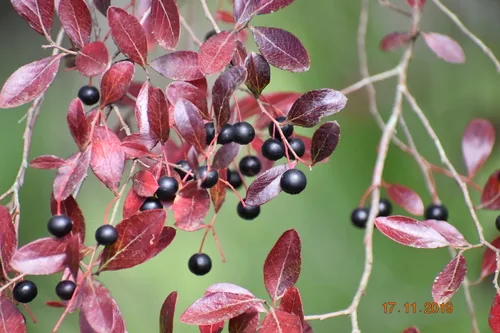
Sparkleberry (*Vaccinium arboreum*) is a southeastern native that can grow shrubby or downright tree-like, with flaky bark and small dark berries that read ‘bird food’ more than ‘pie filling’ for most humans — tart, seedy, honest. It tolerates poor sandy acid soils where blueberries feel at home, and it laughs at drought better than pampered cultivars. subtropical and tropical Americas: excellent backbone species for oak-scrub edges, pine understories, and ‘stop mowing that sandhill’ projects. Full sun to part shade; more sun usually means more flowers and fruit. Well-drained acidic soil; drought-tolerant once established. Avoid lime and alkaline water love. Seeds: cold stratify several months; slow but doable. Cuttings: hardwood cuttings with acid media and patience. Transplants: small plants establish best; protect from root desiccation. Sparkleberry: pick berries when fully colored and detach with a gentle tug -- whitish bloom still present is fine. Cool mornings beat hot afternoons for shelf life; chill soon if not eating the same day. Freeze dry on trays before bagging so berries do not fuse into a single ice meteor.
Permaculture Functions
- Edible: Vaccinium arboreum glossy black berries stay tart straight off the shrub -- worthwhile for intense jam where picking ladders reach tall crowns.
- Wildlife Attractor: Early nectar bells feed mason bees along sand ridges -- while autumn fruit disappears to migrants before humans finish ladders.
- Ornamental: Exfoliating cinnamon bark and twisted multi-trunk silhouettes suit designer parking islands -- that finally quit thirsty turf.
- Pollinator: Urn blooms open ahead of cultivated blueberry clones -- regional bee populations stay fed during the gap week before commercial varieties open.
Companion Planting
Also mentioned as companions:
- Pine
Not yet profiled in PermiePortal
- High-pH soils and chronic irrigation with hard water
Threats & Pressure