About
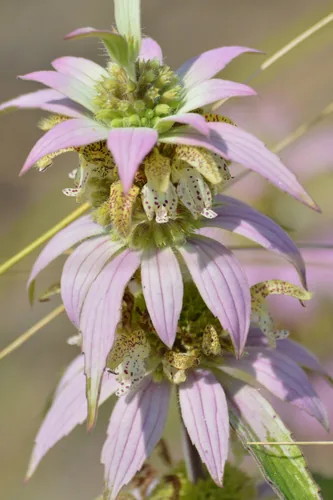
Spotted bee balm (Monarda punctata) is an aromatic mint-family perennial of sandy prairies, pine barrens, and open coastal plain habitats across much of eastern and central North America. Plants are often biennial-acting in harsh sites but persist by seed; whorls of creamy flowers spotted with purple ride stacked tiers up the stem, smelling of thyme and oregano. Long-tongued bees, wasps, and butterflies mob it in late summer when many flowers quit. Full sun gives the sturdiest, most fragrant growth; tolerates bright part sun. Prefers lean, well-drained sand or gravelly soils; hates constant soggy roots. Drought-tolerant once established compared with many mints; in humid rainy periods improve airflow to reduce foliar disease pressure. Sow seed in fall outdoors or cold-stratify for spring; light-dependent germination is common. Soft tip cuttings in late spring root under humidity. Divide young clumps in early spring before rapid growth; plants can be short-lived—allow some seed to drop for replacements. Cut leafy flowering tops at peak bloom for teas, steam distillation experiments, or dried bouquets; dry quickly in thin layers. Leave a portion of stems for native pollinators and seed maturity if you want self-sowing.
Permaculture Functions
- Pollinator: Monarda punctata stacked yellow tubes drip nectar for long-tongued bees and predatory wasps during August heat -- when monarda fistulosa finished weeks ago.
- Medicinal: Thymol-rich leaf teas filled Indigenous and eclectic cough protocols -- confirm pregnancy status before medicinal cups because lamiaceae chemistry is not shy.
- Ornamental: Pink-bracted tiers read like coral fireworks against silver narrowleaf foliage -- on coastal plain sand.
- Wildlife Attractor: Busy hymenopteran traffic pulls flycatchers and warblers to hunt -- along meadow margins you leave unmowed.
- Pest Management: Carvacrol plumes confuse some herbivore scent trails when dotted horsemint forms insectary strips beside solanaceous rows -- scout damage anyway because oils are not armor.
Companion Planting
- Powdery mildew-prone relatives — spacing and sun reduce risk; avoid overhead irrigation schedules that wet foliage all night
- Skin photosensitivity — handling aromatic oils then strong sun can irritate sensitive people