About
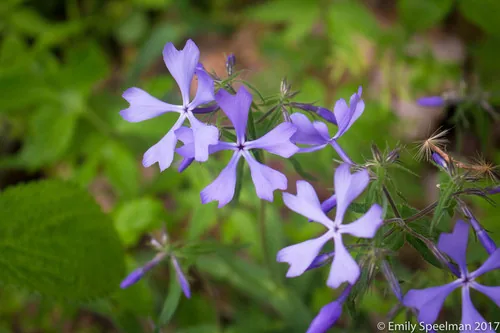
Wild blue phlox (Phlox divaricata) is a woodland perennial of eastern North America, spreading into loose mats with semi-evergreen leaves and fragrant lavender-blue flowers in spring. Plants stay under roughly 1 foot (30 cm) tall, rooting at nodes where stems touch soil. It belongs under deciduous trees, along paths, and anywhere dry shade needs honest flowers without hosta monoculture. Partial shade to light sun; morning sun with afternoon shade works in hot climates. Moist, humus-rich, well-drained soils suit it; tolerates dry shade once established with mulch. Avoid wet clay stagnation. Divide mats after flowering; sow seed with cold stratification. Keep transplants moist until rooted. Primarily ornamental—leave flowers for early pollinators. Peak bloom follows local spring warmth after frost risk near 28°F (-2°C) declines.
Permaculture Functions
- Pollinator: Phlox divaricata lavender-blue salverform corollas feed early bumble queens and hairstreaks -- fragrance peaks on warm mornings before tree leaves fully shade.
- Ground Cover: Semi-evergreen mats root at nodes on rotting logs -- fills dry shade pockets where turf dies with dignity.
- Ornamental: Loose stems look like blue mist above spring ephemerals -- pair with foamflower for contrast without color war.
- Wildlife Attractor: Early nectar supports woodland specialist bees before generalist meadow composites wake -- leave mats for skipper larvae where species overlap.
Companion Planting
- Hot dry sun — scorched leaves and existential sulking
- Powdery Mildew — improve airflow if mats become too dense