About
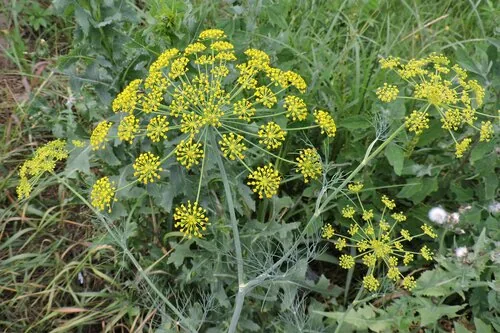
Dill (Anethum graveolens) is an aromatic, feathery-leaved annual herb that grows up to 90 cm (3 feet) tall. It produces delicate, umbrella-shaped clusters of yellow flowers that attract beneficial insects. The entire plant, including leaves, seeds, and flowers, is edible. Dill thrives in well-drained, slightly acidic to neutral soil and is commonly used as a culinary and medicinal herb. It self-seeds easily, making it a great addition to herb gardens and food forests. Prefers full sun but tolerates partial shade. Grows best in well-drained, sandy or loamy soil. Requires moderate watering; avoid overwatering to prevent root rot. Seeds: Direct sow in early spring or late summer; does not transplant well. Self-seeding: Reseeds easily if flowers are left to mature. No division: Best grown from seed rather than division or cuttings. Leaves can be harvested once plants reach 20 cm (8 inches) tall. Flowers should be harvested when fully open for best flavor. Seeds are ready when they turn brown and dry on the plant.
Permaculture Functions
- Edible: Feathery leaves go on fish the day they are picked; green seed heads pack into pickle jars before umbels brown -- toast dry seed for potato soups where anise notes replace caraway.
- Medicinal: Carminative seed tea is old European comfort for gas after heavy meals -- Apiaceae allergy cross-reactivity with celery and carrot exists for sensitive people.
- Pollinator: Yellow compound umbels feed tiny parasitic wasps and tachinid flies that also hunt tomato fruitworm eggs two rows over -- when umbels stay open through July heat.
- Wildlife Attractor: Black swallowtail larvae strip fennel-looking foliage -- plant a sacrificial row if you want butterflies without holes in every carrot leaf in the guild.
- Border Plant: Tall ‘Mammoth’ at bed ends marks north corners for wind so shorter basil does not get hammered -- reseed every three weeks if you want leaf before heavy bolt.
- Pest Management: Aphid banks sometimes coat umbels first -- scout there before spraying brassicas; syrphid larvae follow shortly after if you avoid broad-spectrum kill days.
Field Observations
- No field observations yet
Threats & Pressure