About
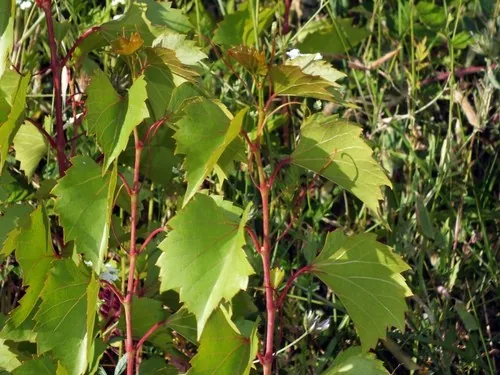
Sand grape (Vitis rupestris) is a North American wild grape of river gravels, sandy banks, and rocky prairies, famous for deep roots and small thick leaves. Berries are blue-black and seedy but useful for jelly; the species is a historic rootstock for drought and nematode pressure. It suits stabilizing hot slopes and living fences where pampered table grapes melt. Full sun; partial shade reduces fruit and encourages mildew in humid air. Drought tolerant once established; young vines need steady moisture to root deeply. Sandy, gravelly, or rocky well-drained soils; tolerates alkaline river cobble. Hardwood cuttings root readily in late winter. Layering canes in spring on loose soil. Seeds stratify; use when breeding, not when hungry this decade. Pick berries at full color for small-batch jelly; yield is modest, labor honest. Prune in dormancy to keep vines off young trees you value. Leave some clusters for birds along migration corridors.
Permaculture Functions
- Edible: Vitis rupestris clusters stay small and seedy -- simmer with sugar into deeply colored jelly where tannin reads bold unless you balance acid.
- Wildlife Attractor: Blue-black berries fuel songbirds during migration passes -- thick leaves host native sphinx and grape-leaf skeletonizers that matter to intact food webs.
- Erosion Control: Deep woody roots wedge into river cobble and shifting bank sand better -- than shallow cultivated hybrids on the same hot slope.
- Shade Provider: Train cordons across pergolas and south-facing walls so small thick leaves cast summer shade -- without the dense humidity pocket of larger-leaf table grapes.
Companion Planting
Threats & Pressure