About
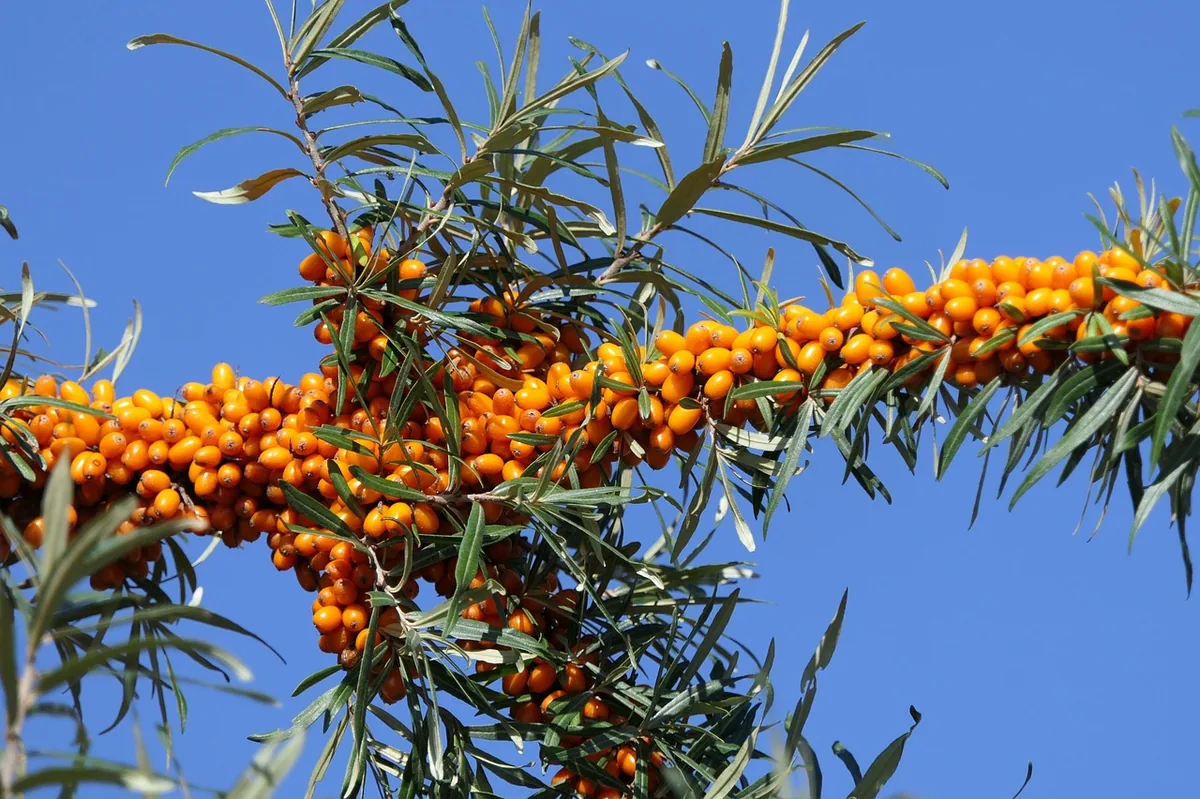
Sea Buckthorn is a hardy, deciduous shrub that typically grows between 2 to 4 meters (7 to 13 feet) in height. It features rough, brown or black bark and a dense, grayish-green crown. The leaves are narrow, lanceolate, and silvery-green on the upper surface. This dioecious plant requires both male and female specimens for fruit production, with wind facilitating pollination. Female plants produce vibrant orange berries that are soft, juicy, and rich in oils. The plant develops an extensive root system that fixes nitrogen, making it valuable for soil enrichment and erosion control. Sea Buckthorn thrives in full sunlight and is intolerant of shady conditions. It is exceptionally hardy, withstanding winter temperatures as low as -40°F (-40°C). The plant prefers well-drained soils and demonstrates remarkable drought and saline tolerance once established. Propagation is commonly achieved through seeds or hardwood cuttings. Seeds require stratification and should be sown in well-drained soil. Hardwood cuttings can be taken during dormancy and rooted in a suitable medium. The bright orange berries typically ripen from late summer to early autumn. Harvesting can be challenging due to the plant's thorny branches and the berries' tendency to adhere firmly to the stems. Utilizing specialized berry-picking tools or pruning entire berry-laden branches for easier collection is recommended.
Permaculture Functions
- Edible: Hippophae rhamnoides female plants bear orange oil-rich drupes that stain fingers -- juice them off the stem for syrups high in vitamin C after you plant a confirmed male for wind pollen.
- Nitrogen Fixer: Elaeagnaceae roots nodulate with actinomycetes that bank nitrogen on poor berms -- pair female clones where apples need shelter fertility without soluble urea passes.
- Wildlife Attractor: Thorny thickets hide songbirds -- while soft fruit ferments on the bush until waxwings arrive in noisy waves.
- Erosion Control: Suckering roots grip river cobble and road cuts -- where loose substrate would sluff after spring freshets.
- Windbreaker: Multistem silver shrubs planted on contour trim desiccating wind -- across berry rows and tunnel houses on cold sites.
- Medicinal: Seed and pulp oils show up in skin-soothing formulas across Eurasian herbal commerce -- separate cosmetic trials from clinical disease claims before marketing.
Companion Planting
- Shady trees