About
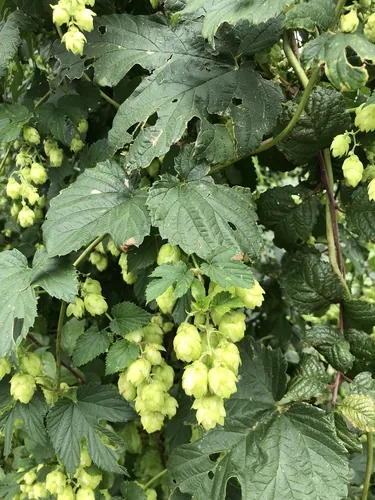
Hop shoots come from common hop, a long-lived dioecious vine famous for brewing cones and, in spring kitchens, blanched spears that taste like aggressive asparagus. Twining bines can climb 15–20 feet in a season, with rough leaves and sticky lupulin glands on female cones where present. In subtropical and tropical Americas hops are a cool-season flirtation: humid summers spike downy mildew pressure, so give afternoon shade, relentless airflow, and strict trellis hygiene; Puerto Rico’s highland pockets with cooler nights outperform steamy coastal flats. Treat shoots as a seasonal vegetable where crowns survive winter dormancy or brief chill. Full morning sun with afternoon shade in hot humid climates; full sun only where nights cool reliably. Rich, well-drained soil with steady moisture during spring surge; never waterlog crowns. Heavy mulch keeps roots cool; drip irrigation beats overhead wetting during fungal weather. Rhizome division in late dormancy before spring growth; each piece needs buds and some root. Softwood cuttings in spring under mist for named female clones used for cones or shoots. Layering: bury a low runner while still attached until it roots, then sever. Snap tender shoots at 6–10 inches in early spring before they lignify; blanch or sauté like hop-asparagus. For cones (where legal and desired), pick when bracts feel papery and lupulin is fragrant, usually mid-to-late warm season in cooler districts.
Permaculture Functions
- Edible: Humulus lupulus crowns push edible shoots in early spring -- blanch or sauté 6-10 inch spears before fibers lignify, and pick female cones at papery bracts when lupulin perfumes the hand for beer or sleep teas where law allows.
- Pollinator: Plants are dioecious with wind-pollinated flowers, yet hop yards still sit beside flowering companions -- the vine mass itself shelters parasitic wasps and spiders that patrol adjacent rows when you avoid broad-spectrum sprays.
- Windbreaker: Twining bines knit dense summer screens on cattle panels or barn walls -- slows desiccating wind on west-facing vegetable beds without casting deep permanent shade once dormant.
- Ornamental: Chartreuse 'Aureus' selections turn fences into seasonal curtains -- plan for aggressive rhizomes and mildew scouting in humid summers so the display stays leafy, not spotted brown.
Companion Planting