About
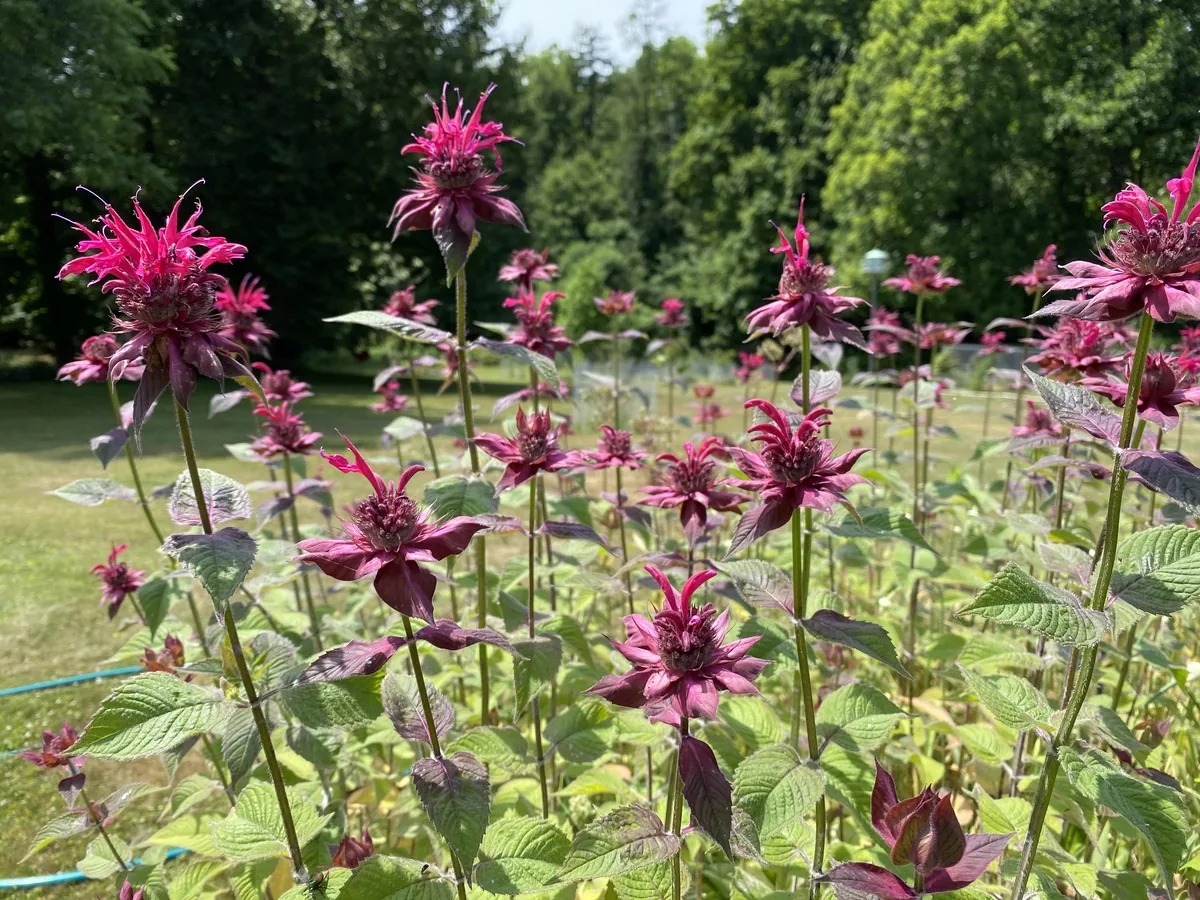
Bee Balm (Monarda didyma) is a hardy, herbaceous perennial known for its vibrant red, pink, or purple flowers that attract bees, butterflies, and hummingbirds. The plant grows between 60–120 cm (2–4 feet) tall with square stems and aromatic, lance-shaped leaves. It thrives in moist, well-drained soil and spreads via rhizomes, forming dense patches over time. The flowers bloom from mid to late summer, providing a long-lasting nectar source. Bee Balm is commonly grown in pollinator gardens, herbal medicine gardens, and as a companion plant in vegetable gardens. Prefers full sun but tolerates partial shade. Grows best in rich, well-drained soil with consistent moisture. Moderate water needs; avoid waterlogging to prevent powdery mildew. Seeds: Start indoors 8–10 weeks before the last frost or direct sow in spring. Division: Easily propagated by dividing root clumps in early spring or fall. Cuttings: Stem cuttings can be rooted in water or moist soil. Leaves can be harvested anytime during the growing season for tea or fresh use. Flowers should be harvested at peak bloom for medicinal or culinary purposes. Regular pruning promotes new growth and extends the flowering season.
Permaculture Functions
- Edible: Monarda didyma tubular red petals and aromatic leaves flavor Oswego tea and fruit syrups without true mint stolons eating the path -- harvest before powdery mildew bronzes the eating quality.
- Medicinal: Thymol-rich volatile oil shows up in traditional cold and sore-throat steams -- concentrated essential oil is harsh; water extractions still need pregnancy contraindication checks.
- Pollinator: Long corolla tubes match ruby-throated hummingbirds and long-tongued bumblebees in July-August lulls -- horizontal branching gives landing pads smaller bees still use on 'Jacob Cline' types.
- Wildlife Attractor: Seed heads feed finches after frost while hollow stems shelter overwintering small bees if you delay aggressive chop -- leave a few ugly stalks for honesty.
- Mulcher: Soft square-stem residue breaks down fast in compost when you cut spent clumps -- mix with browns because nitrogen-rich mush can anaerobic without structure.
- Dynamic Accumulator: Rhizomatous roots mine moist fertile beds for phosphorus that shows up in dark green leaves -- chop-and-drop before seed shatter if you want nutrients on-site, not on the lawn.
- Border Plant: 90-120 cm wands edge pollinator strips with readable color from across the yard -- open vase pruning reduces central mildew pockets in humid subtropical trials.
- Pest Management: Thyme-scented foliage confuses some searching aphids when interplanted with tomatoes -- it is not a shield against every cucumber beetle; results track humidity.