About
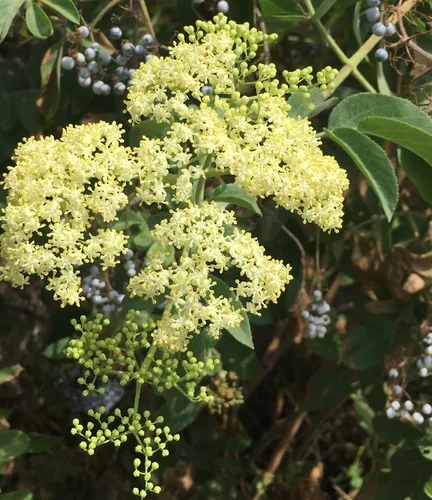
Blue elderberry (Sambucus cerulea) is a rangy deciduous shrub or small tree native to western North America and parts of Central America, bearing creamy flower clusters and waxy blue berries beloved by birds and useful in kitchens that respect cooking guidance. Plants commonly reach 10–18 feet (3–5.5 m) with soft pithy stems and compound leaves; fruit ripens earlier than many woodland berries in its range. It fits riparian buffers, hedgerows, and multistory edges where fast biomass and wildlife food beat lawn purity. Full sun to partial shade; sunnier sites yield heavier fruit. Tolerates drought once established but fruits better with occasional deep watering during dry spells. Handles many soils if drainage is reasonable; stabilizes coarse banks when roots lock into cracks. Hardwood cuttings in late winter root easily; wild-collect only where ethical and legal. Sow stratified seed for diversity; clones preserve known fruit traits. Renewal-prune old canes after fruiting cycles slow to keep flowering wood young. Strip blue berries when waxy bloom dulls slightly and clusters release readily—cook per reliable regional guidance. Flowers can be dried for teas where traditions support it. Leave a share for birds that seed nearby thickets you will later claim you did not plan.
Permaculture Functions
- Edible: Waxy blue Sambucus cerulea clusters need heat processing and sorting discipline, then read as syrup, jelly, or wine -- where pH and time-on-heat follow tested recipes.
- Medicinal: Cream flower cymes dry for tea traditions separate from berry work -- both stay behind ID checks because uncooked elder parts still cause GI hits.
- Wildlife Attractor: Insect clouds mob flat-topped bloom platforms in late spring -- finches strip fruit so fast you hear the bush before you see ripe clusters.
- Erosion Control: Suckering roots lock riprap and sandy banks -- effective where irrigation is rare but flash runoff is not.
- Mulcher: Soft compound leaves drop fast in fall -- building a loose litter mat under the thicket for fungal feeders if you leave lower stems unshaved.
Companion Planting
- Raw berry consumption without proper prep — same serious caution family as other elders
- Suckering spread — plan boundaries on small lots before the thicket votes to expand