About
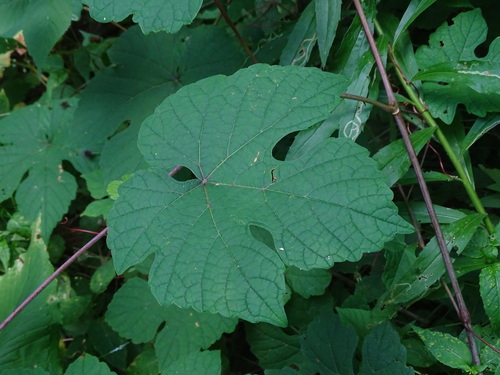
Summer grape (Vitis aestivalis) is a high-climbing deciduous grape of eastern and central North American forests, thickets, and fencerows. Lobed leaves and shreddy bark on older stems distinguish it from other native grapes; small dark fruits ripen mid to late summer with tart flavor. It is a rootstock source, jelly grape for foragers, and vertical habitat for wildlife when allowed on sturdy trellis or open trees you accept as living posts. ☀️💧 Sun and Water Requirements: Full sun for heaviest fruiting; climbs toward light in partial forest edges. Average moisture with good drainage; tolerates short drought once established but fruits better with even soil moisture through veraison. Avoid root drowning in compacted bowls. ✂️ Propagation: Hardwood cuttings in late winter root readily; layer stems where legal and ethical on your site. Grow seedlings from cleaned seed for diversity; fruit quality varies. Prune annually for air and light if cultivating for harvest. 🌾 Harvest / Best Use Timing: Pick clusters when berries soften and color fully; expect seeds and tart juice—jelly and syrup are classic. Net vines if you need human share versus raccoon conventions. Prune after leaf fall for structure visibility.
Permaculture Functions
- Edible: Tart fruits make jelly, juice, and wine experiments; flavor is bolder than grocery grapes.
- Wildlife Attractor: Fruit feeds birds and mammals; dense vine cover shelters nesting songbirds.
- Erosion Control: Woody stems and roots stabilize fence lines and steep edges when trained on posts.
- Ornamental: Shreddy bark and bold leaves add vertical texture to native arbors.
Practitioner Notes
- If you want seedless supermarket slips, wrong vine—this is flavor with homework and seeds.
- Prune like you mean it; grapes are enthusiasm engines that will eat your pergola if ignored.
- Raccoons consider your crop a community-supported agriculture program—plan netting early.
- Bark shreds with age; that is not disease, that is character.
Companion Planting
- American Persimmon — tall fruiting tree that accepts grape vines on rough bark where management allows
- Black Elderberry — shrub layer at vine base; both produce harvestable fruits with distinct seasons
- Fox Grape — related native Vitis species sometimes co-occur; manage mixing to simplify pruning hygiene
- Grapevine weight — can break weak trees; use posts and wire instead of prized ornamentals
- Japanese beetle pressure — scout leaves in midsummer; diverse habitat still helps predators
Pest Pressure