About
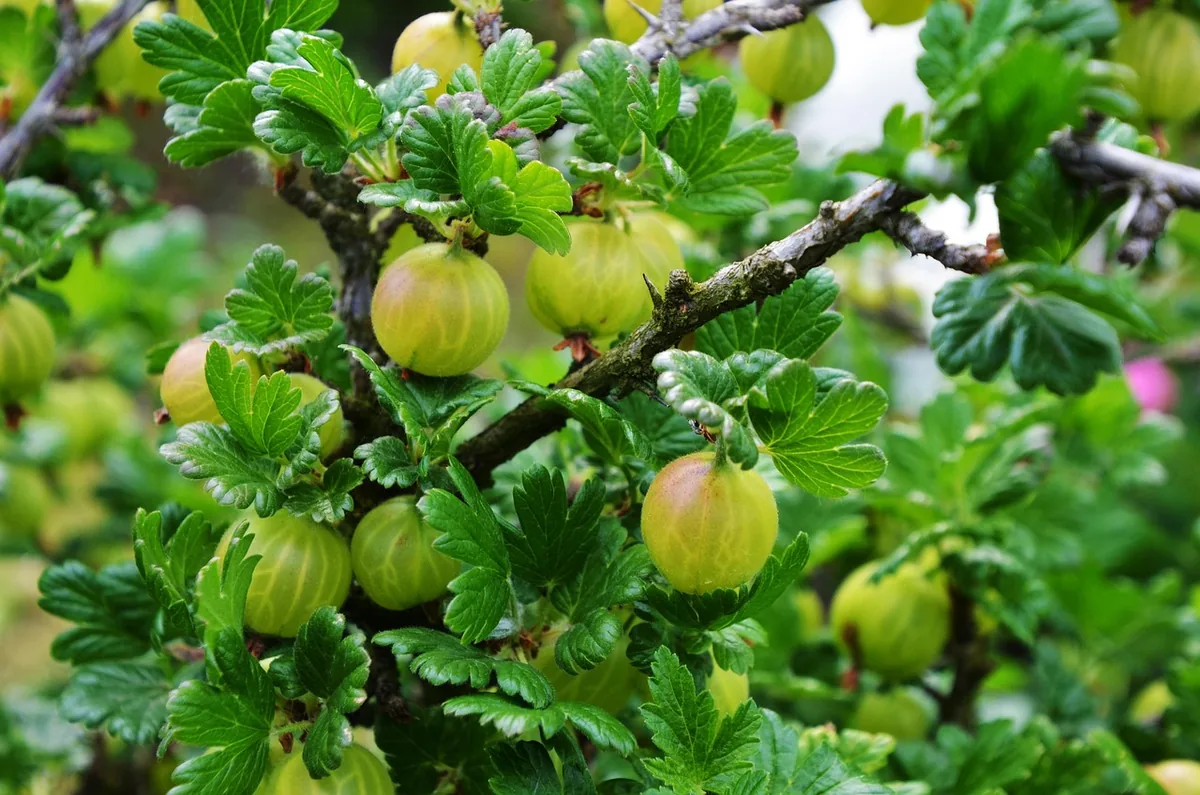
Gooseberry bushes are deciduous shrubs typically growing between 3 to 5 feet (0.9 to 1.5 meters) in both height and width. They have arching branches equipped with sharp spines. The leaves are rounded with 3 to 5 lobes and serrated edges. Flowers are small, greenish-pink, and self-fertile, leading to berries that vary in color—green, yellow, red, or purple—depending on the cultivar. The berries are similar in size and flavor to grapes, with a translucent skin that can be white, yellow, green, or red. Gooseberries thrive in cooler climates and are relatively easy to grow, yielding tart berries ideal for culinary uses. Gooseberries can be grown in full sun as well as partial shade. In warmer climates, they need protection from the hot midday or afternoon sun. They prefer moist, well-drained soils and should be watered regularly to maintain soil moisture. Gooseberries can be propagated through hardwood cuttings taken during the dormant season or by layering, where a low branch is bent to the ground and covered with soil until roots develop. Berries are typically ready for harvest in mid to late summer, depending on the variety and climate. They should be picked when they have reached full size and exhibit their mature color but before they become overly soft.
Permaculture Functions
- Edible: Ribes uva-crispa bears tart, grape-sized berries with translucent skin -- eat fresh at full color, or cook into sauces, pies, and preserves where acidity carries flavor without added pectin drama.
- Wildlife Attractor: Soft fruit draws thrushes and other fruit-eaters when berries sweeten -- expect losses unless you net or harvest early for kitchen use.
- Border Plant: Arching canes armored with sharp spines knit into hedges that slow people and browsing mammals -- train as a barrier row along paths or livestock edges where you want fruit plus security.
Companion Planting
- Tomato
- Potato
- Black Walnut