About
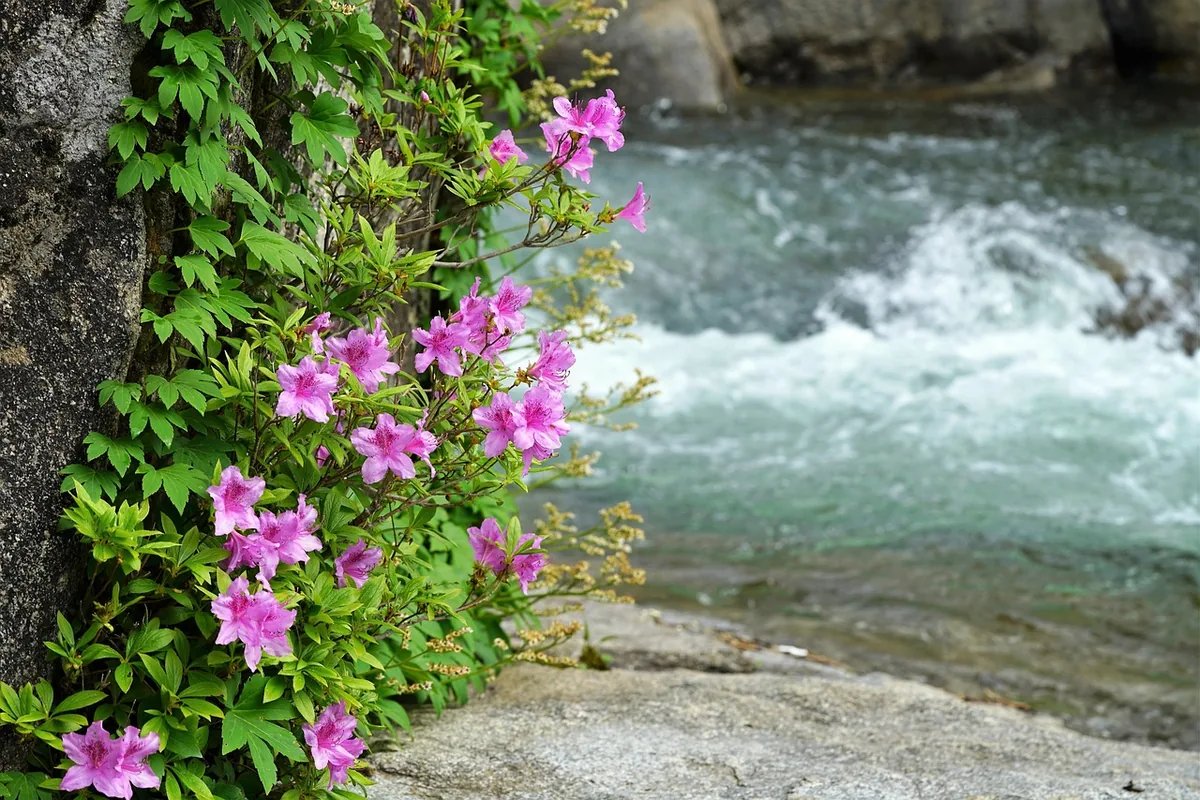
Azaleas are flowering shrubs within the Rhododendron genus, celebrated for their vibrant blooms that range from white and pink to red, orange, and purple. Depending on the species and cultivar, azaleas can be deciduous or evergreen. They typically grow between 0.6 to 1.8 meters (2 to 6 feet) in height, forming rounded, bushy shapes. Azaleas are slow-growing and thrive in well-drained, acidic soils with a pH between 4.5 and 6.0. Their funnel-shaped flowers often appear in clusters during the spring, creating striking displays in gardens and landscapes. Azaleas prefer partial shade, especially in hotter climates, to protect them from intense afternoon sun. They require consistent moisture, favoring well-drained soils rich in organic matter. Mulching helps retain soil moisture and regulate temperature. Overwatering or poor drainage can lead to root rot. Azaleas are commonly propagated through semi-hardwood cuttings taken in late summer. Select healthy, non-flowering shoots about 10–15 centimeters (4–6 inches) long, remove the lower leaves, and dip the cut end in rooting hormone before planting in a moist, well-draining medium. Keep the cuttings in a humid environment until roots develop. Seed propagation is also possible but less common due to variability in offspring. As ornamental plants, azaleas are not harvested for edible purposes. However, pruning spent blooms after flowering can promote plant health and encourage more vigorous growth in the following season.
Permaculture Functions
- Pollinator: Rhododendron evergreen and deciduous azaleas funnel nectar to early bumblebees and swallowtail butterflies through clustered spring blooms -- lace bugs still stipple leaves, so hose undersides before declaring pollinator victory.
- Wildlife Attractor: Dense twiggy crowns shelter wrens and towhees at woodland edges while thickets block wind chill on north slopes -- petals drop en masse after bloom, so plan skimmer baskets near pools.
- Border Plant: Mounded 2-6 foot forms edge paths with predictable geometry on acid organic beds -- pair with camellia and dogwood where pH stays below 6 without limestone topdress mistakes.
- Ground Cover: Prostrate Satsuki-type selections root into slopes and suppress weeds under oaks where turf refuses -- shallow roots mean competition is real, so skip thirsty summer vegetables inside the drip line.
Companion Planting
No companion data yet.
Also mentioned as companions:
- Fern
- Hosta
- Camellia
- Dogwood
- Oak
Not yet profiled in PermiePortal
- Black Walnut
Threats & Pressure