About
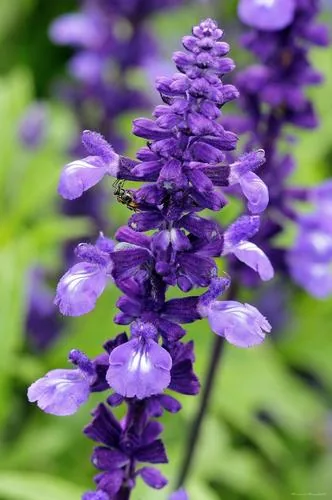
Blue sage is a tall prairie perennial with spikes of true sky-blue flowers that make monarchs and bees look like they planned the photo shoot. Not as thirsty as lawn culture; not as drought-mean as desert succulents. In subtropical and tropical Americas give it air movement and drainage—powdery mildew shows up to parties when nights stay sticky and leaves never dry. Full sun for strong stems; plants flop in shade like they lost the will to stand. Well-drained soil; moderate moisture—tolerates short drought once deep-rooted. Seeds: cold-moist stratify or fall-sow; germinates in cool-warm swings. Soft tip cuttings in spring root under humidity. Cut flowering stems for bouquets; deadheading prolongs bloom in longer seasons.
Permaculture Functions
- Pollinator: Salvia azurea tubes open late in the prairie year -- so long-tongued bees and migrating hummingbirds still pull nectar when goldenrod dominates yellow.
- Wildlife Attractor: Seed capsules rattle small finch flocks into frost if you leave stems -- spent spikes also host predatory wasps hunting soft-bodied bugs.
- Border Plant: Four-to-six-foot spikes of true sky blue anchor the back row of sun beds without shading low herbs -- if you Chelsea-chop rich soil floppers.
- Medicinal: Like other salvias, aerial parts carry volatile oils tied to old sweat tea and fever formulas -- so any internal trial starts with species confirmation and dose notes from trained herbalists.
Companion Planting
Also mentioned as companions:
- Goldenrod
- Liatris
Not yet profiled in PermiePortal
- Heavy wet clay with stagnant air
- Shrub shade that turns it into a mildew condo