About
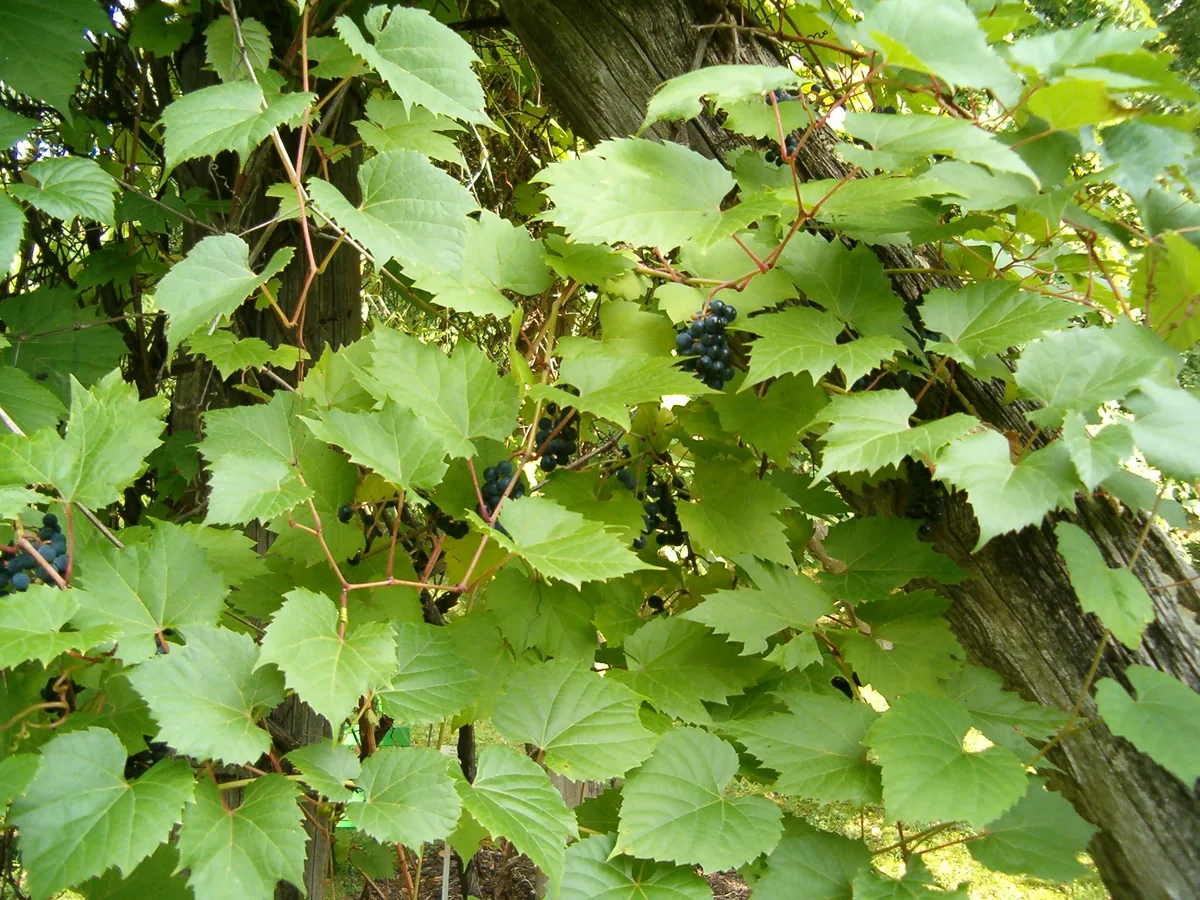
Frost grape (Vitis vulpina) is a high-climbing native grape of eastern and central North America, with shredding bark, broad leaves, and small blue-black berries that hang late into cool season—hence the common name. Fruit is tart and seedy but useful for jelly, juice trials, and wildlife buffets; it is not a table grape without breeding and sugar. The vine fits food forest edges, riparian corridors, and trellis systems where Japanese beetles are a tax you already budgeted. Full sun to partial shade; best fruiting in canopy gaps with strong light. Prefers moist, fertile, well-drained soils along woods edges and streams; tolerates periodic drought once deep roots establish. Avoid root drowning in compacted swales. Hardy through cold-temperate winters; late frosts can nip tender shoots in unpredictable springs. Hardwood cuttings taken in dormancy root under humidity and bottom heat. Layer long canes to soil to start new crowns on fence lines. Pick clusters after the first light frosts sweeten berries slightly, or when birds schedule their own harvest. Process quickly into juice or jelly; seeds are honest about existing. Prune hard in dormancy to maintain airflow and reduce fungal load.
Permaculture Functions
- Edible: Vitis vulpina small blue-black clusters sweeten slightly after first light frost for high-acid jelly -- seeds stay crunchy and shredding bark IDs the native vine before you tap the wrong grape on fence lines in zone 5-9.
- Wildlife Attractor: Late fruit hangs for robins after Vitis vinifera table grapes are gone -- while grape flea beetle larvae complete lifecycles on riparian canopy edges where Japanese beetles stay a budgeted tax not a surprise plot twist.
- Erosion Control: Liana stems lace floodplain willows and fence posts to knit debris during high-water events on Midwest streambanks -- where you prune for sun each dormant season instead of letting fungal load smother fruiting wood.
- Mulcher: Broad cordate leaves drop heavy autumn mats that feed spring morel patches under retained riparian shade -- when prunings stay on-site chop-and-drop instead of municipal yard-waste trucks hauling carbon away.
Companion Planting
Also mentioned as companions:
- River Birch
- Hazelnut
Not yet profiled in PermiePortal
- Grapevine diseases (powdery mildew, anthracnose) build in humid, crowded canopies—prune for sun and air