About
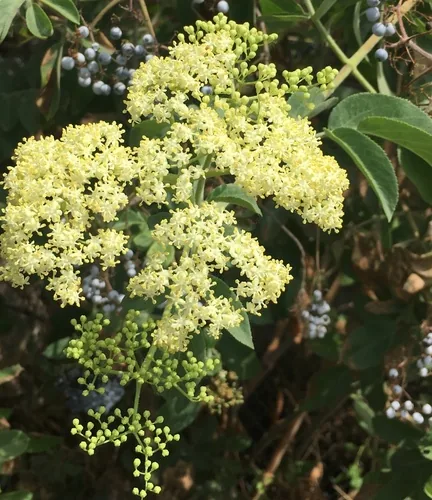
Mexican elderberry (Sambucus mexicana) is a fast-growing, often multi-stemmed large shrub to small tree native to Mexico and the southwestern United States, where it lines washes and terrace edges with pinnate leaves and flat white flower clusters followed by small dark berries. Heights of 10–20 feet (3–6 m) are common with moderate water and sun; plants spread by suckers where soil stays workable. In food systems it mirrors other elders—flowers and ripe berries have long kitchen histories where processing traditions are respected—while providing early-season insect resources and late bird food. Full sun to bright partial shade; more sun tightens growth and improves flowering. Deep, fertile, well-drained soils are ideal; tolerates alkaline pockets and seasonal dryness once roots dive, but appreciates irrigation during prolonged drought in hot climates. Mulch to reduce evaporative stress; avoid chronic waterlogging that weakens roots. Hardwood cuttings taken in dormant season root under mist or humid cold frames. Sow cleaned seed after cold-moist stratification to improve uniformity. Remove excess suckers if you want a tree form; leave some if a wildlife thicket is the goal. Pick flower umbels when most buds have opened and fragrance peaks—dry or process the same day when possible. Berries are handled only when fully ripe and processed per trusted recipes; raw green berries and other green tissues are not snack food. Prune out old, weak canes after fruiting cycles to renew vigor.
Permaculture Functions
- Edible: Sambucus mexicana flowers and fully ripe berries enter syrups, wines, and preserves only through vetted processing -- green berries and bark carry cyanogenic compounds, not snack chemistry.
- Wildlife Attractor: Flat white umbels feed early-season pollinators while dark drupes feed birds that sling seed past fence lines -- plan for sucker cleanup if you dislike volunteer thickets.
- Mulcher: Compound leaves and fine twigs drop litter that feeds fungal food webs along washes and terrace backs -- rake into beds instead of hauling off-site.
- Border Plant: Multi-stem habit screens poultry paddocks and alley edges when irrigation keeps soil workable -- edge with root barrier if paths must stay straight.
Companion Planting
- Cyanogenic and irritant tissues in unripe fruit and bark—research processing before marketing to humans or livestock
- Suckering — spreads into paths if irrigation is generous and edging is lazy