About
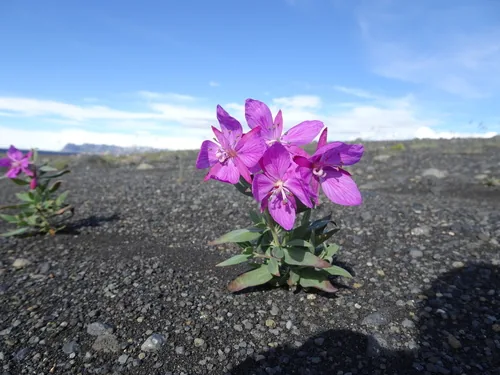
Fireweed (*Chamaenerion angustifolium*) is a tall perennial wildflower of northern and montane regions, famous for colonizing burns and clearings with magenta flower spikes and willow-like leaves. Plants commonly reach 3–6 feet in one season from creeping rhizomes. In subtropical and tropical Americas it is marginal in steamy lowlands—better as a cool microclimate experiment under shade cloth, at elevation in Puerto Rico, or as a winter-active annual-like flush where winters are mild but nights stay cool enough to limit heat stress. Full sun in cool climates; in warm subtropical sites give bright partial shade and extra soil moisture without stagnation. Avoid drought in sandy soils; rhizomes spread fastest in moist, open ground. Seeds: Tiny cottony seeds; surface-sow in cool conditions—many ecotypes need light and fluctuating temperatures to germinate well. Rhizome divisions: Dig and split dormant or early-spring shoots; replant segments with buds. Young spring shoots can be cooked like asparagus when a few inches tall. Flowers and leaves are used for tea in moderation; pith of older stems has traditional food uses where permitted by local knowledge. Stop picking once plants flower if you want maximum seed for wildlife.
Permaculture Functions
- Edible: Chamaenerion angustifolium spring shoots peel and steam like asparagus when a few inches tall before magenta racemes elongate -- older stem pith enters some northern teas only after bark strings strip away on known clean burns.
- Pollinator: Terminal spikes keep magenta cross-shaped flowers opening upward along raceme for weeks on boreal burn scars -- where honey flows document fireweed monofloral harvests in cool open sun.
- Wildlife Attractor: Cottony wind seed drifts feed finch flocks raiding late-summer seed rain above regenerating alder cuts -- when you leave a few stalks uncut for wildlife accounting on zone 2-8 edges.
- Biomass: Rhizomatous crowns leap three to six feet first season after disturbance so whole stalks feed thermal compost piles -- if you relocate edges away from septic fields and foundation drains.
- Mulcher: Narrow leaves drop quickly after frost to blanket alder slash -- where growers want fast mulch blankets before winter snow insulates soil on disturbed northern sites.