About
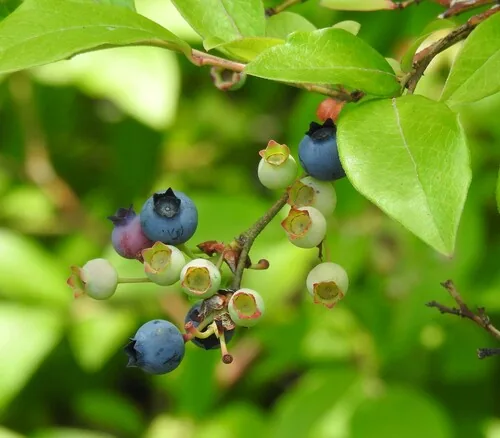
Highbush blueberry (*Vaccinium corymbosum*) covers a swarm of cultivars from chill-loving northern types to lower-chill southern highbush selections. The species story is simple: acidic soil, plenty of organic matter, sun, water at the right times, and pruning that removes old wood without turning the plant into a hat rack. Pick cultivars matched to your chill hours at warm low-chill margins — otherwise you are landscaping with excuses. Full sun for best yields. Even moisture, especially during bloom and fruit sizing; excellent drainage is non-negotiable. Softwood cuttings under mist in summer — standard nursery method. Layering: low branches pinned to mulch can root if kept moist. Seeds: variable offspring; fine for breeding projects, silly for expecting ‘Bluecrop’ from a berry. Buy tested cultivars for predictable results. Pick when berries darken and slip ripe; staggered ripening means repeat passes through the row.
Permaculture Functions
- Edible: Vaccinium corymbosum ripens indigo berries with true berry flavor once pH sits below 5.2 and organic mulch feeds the fungal root web -- pick at full slip for fresh eating, freezing, or baking before skins split in heat.
- Pollinator: Bell-shaped white clusters open in late spring, offering nectar and pollen to native bees when apple bloom is already done -- avoid insecticide sprays during petal fall if you want fruit set on marginal chill cultivars.
- Wildlife Attractor: Catbirds, thrushes, and chipmunks treat ripe clusters as open buffets -- net rows before color break or plant extra canes specifically for feathered tax.
- Ornamental: Red autumn foliage and waxy spring flowers read clean in mixed shrub borders -- use as a structural edible where sulfur-amended beds already exist for other acid lovers.
Companion Planting
Also mentioned as companions:
- Pine
Not yet profiled in PermiePortal
- Heavy clay bowls without berms or raised beds
Threats & Pressure