About
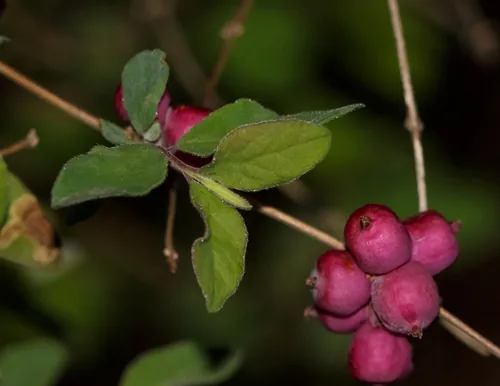
Coralberry (*Symphoricarpos orbiculatus*) is a deciduous North American shrub usually 0.6–1.8 m tall with arching stems, bluish-green leaves, and clusters of pinkish flowers maturing into glossy coral-pink to magenta berries that persist after leaf fall. It spreads modestly by suckers, forming thickets useful for wildlife cover. In Florida's cooler interior pockets it may grow as an understory edge plant, while Puerto Rico's constant tropical heat is generally too low-chill and humid for this temperate species—site it only at elevation or microclimates that mimic its native range if trialed at all. Part sun to light shade in warm districts; full sun where summers stay milder. Average garden moisture with good drainage; tolerates some dryness once established but not desert drought without mulch. Softwood cuttings: Take early summer cuttings with mist; roots form in a few weeks. Suckers: Dig rooted shoots from the edge of a thicket in dormancy or early warm season. Prune out oldest canes after fruit display to renew vigor. Leave late-winter berries for birds; cut stems for winter arrangements before spring flush if desired.
Permaculture Functions
- Wildlife Attractor: Coral-pink to magenta berries persist after leaf fall -- feeding robins, waxwings, and small mammals when dogwood fruit is already gone.
- Erosion Control: Suckering fibrous roots knit disturbed woodland edges, utility easements, and shady ditch banks -- spreads without requiring replanting.
- Border Plant: Arching 2-6 ft stems form a soft thicket hedge between lawn and wilder woods -- without formal shearing.
- Ornamental: Opposite blue-green leaves and bead-like fruit clusters give winter gardens color -- that reads intentional, not abandoned.
Companion Planting