About
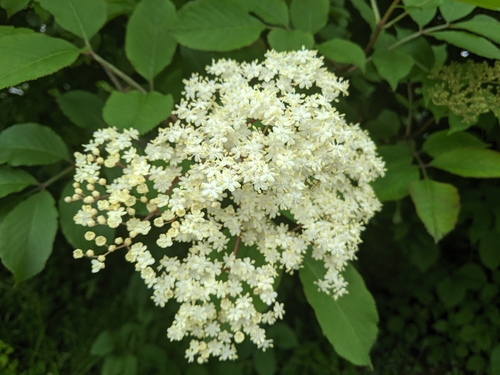
Black elderberry (Sambucus nigra) is a fast-growing deciduous shrub to small tree from Europe and western Asia, widely cultivated for flower cordials, berries used cooked in syrups and wines, and coarse wood for stakes. Pinnate leaves and flat white cymes appear in early summer; ripe black berries hang in heavy clusters on purple-black stems in forms like 'Haschberg'. Mature plants often reach 8–15 feet (2.5–4.5 m) depending on pruning. In cool-temperate food systems it is a high-yield shrub wall for processing—not a raw-snack berry without proper preparation knowledge. ☀️💧 Sun and Water Requirements: Full sun to light partial shade; more sun increases bloom and berry load. Prefers rich, moist, well-drained soil with steady organic matter; tolerates heavier soils better than droughty sand without irrigation. Mulch preserves soil moisture during fruit swell; avoid root drowning in compacted low spots. ✂️ Propagation: Hardwood cuttings taken in late winter root readily under mist or in deep pots outdoors. Sow seed after stratification for diversity trials; named cultivars are cloned. Hard-prune old wood in dormancy to renew fruiting shoots and keep height manageable. 🌾 Harvest / Best Use Timing: Pick flower umbels when most buds are open but before heavy browning. Harvest berries when clusters turn glossy black and stems begin to bend—cook before consumption following trusted food-safety guidance for your region.
Permaculture Functions
- Edible: Flowers and fully ripe cooked berries support cordials, jams, and syrups with documented prep.
- Medicinal: Traditional European herbal uses focus on flowers and berries where law and training allow.
- Wildlife Attractor: Flowers feed insects; berries feed birds—balance harvest share with ecology.
- Border Plant: Fast screens and informal hedges for wind and sight breaks on larger lots.
- Mulcher: Leaf litter builds humus quickly under dense plantings.
Practitioner Notes
- Elderberry chemistry is not a meme—learn prep from reputable sources, not comment sections.
- 'Haschberg' and similar clones are production-minded; seedlings vary in vigor and berry density.
- Birds announce ripeness—if you need a clean harvest window, net selected canes, not the whole watershed.
- Coppice-prune on a rotation if you want reachable flowers without ladders and ego.
Companion Planting
- Highbush Blueberry — shares acidic organic mulch culture at the sunny edge of elder thickets
- Wild Bergamot — aromatic forb increases pollinator traffic near elder bloom
- American Hazelnut — taller nut shrub uses vertical space without shading elder crowns flat
- Raw green berries and other plant parts — contain compounds that demand proper identification and preparation
- Toxic look-alikes exist globally — confirm ID with regional keys before any tasting theater
Pest Pressure