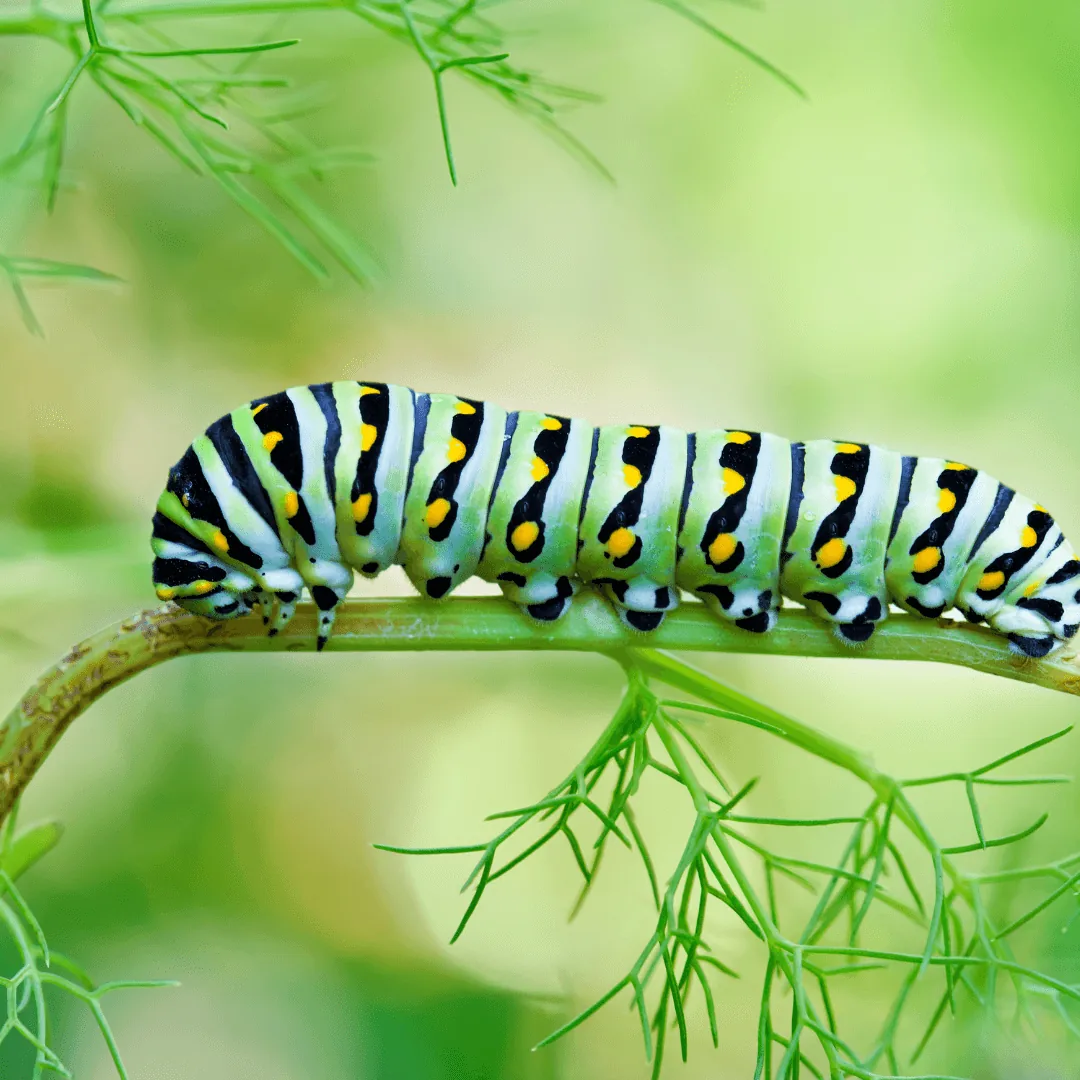
Field Identification
If leaves look shredded overnight or fruit has fresh chew holes, caterpillars may be feeding right now. These larvae can eat fast and strip a healthy plant in a short window. Young stages are easy to miss, then damage suddenly explodes as they grow. Catch them early to avoid severe defoliation and contaminated harvests.
Check leaf undersides, growing tips, and stem junctions for eggs, frass pellets, and feeding scars. Larvae vary in color, but most have a soft segmented body and blend into foliage. Look at dusk or early morning when many species feed more actively. Fresh chewing plus live larvae or droppings on lower leaves confirms an active caterpillar outbreak.
Not sure what you have? Use the symptom diagnosis tool →
How to Deal With It
Organic Control Methods
Parasitic wasps are the most important natural enemies of caterpillars. Braconid, ichneumonid, and trichogramma wasps parasitize eggs and larvae of virtually every caterpillar species. If you see a caterpillar covered in small white rice-shaped cocoons, leave it alone — those are braconid wasp pupae and the caterpillar is already dying. Killing it destroys the next generation of your best allies. Plant dill, fennel, sweet alyssum, and yarrow to sustain parasitoid wasp populations year-round. Birds eat enormous quantities of caterpillars — a single chickadee pair feeds 6,000-9,000 caterpillars to nestlings during breeding season. Bat boxes near the garden provide moth predation at night before eggs are laid.
Most caterpillar damage comes from moth or butterfly eggs laid on specific host plants. Checking plants weekly for egg masses and crushing them is the highest-value preventive activity available. Eggs are species-specific — flat scales on leaves, clusters of spheres, or single eggs depending on species. Row covers installed before egg-laying season exclude adult moths completely. Pheromone traps for key species like codling moth and tomato fruitworm monitor adult flight and tell you exactly when to scout intensively.
Diverse plantings with flowering herbs support parasitoid wasp populations that track caterpillar outbreaks naturally. Remove crop residues promptly after harvest — many caterpillar species pupate in soil under host plant debris. Tilling after harvest exposes pupae to birds and desiccation. Interplanting with aromatic herbs confuses moth navigation and reduces egg-laying rates. Caterpillars feed at specific life stages — knowing whether you are dealing with first instar larvae (tiny, Bt effective) or mature larvae (large, Bt less effective) determines which controls work.
Hand-picking is the most effective control for small gardens — check at dusk and dawn when many species feed most actively. A UV blacklight at night makes many caterpillars glow and easy to spot even when camouflaged. Drop into soapy water. For tree fruits, sticky trunk bands prevent wingless female moths from climbing to lay eggs. Row covers before adult moth flight exclude egg-laying entirely. Egg mass removal on scouting passes is faster and more effective than waiting to deal with larvae.
Bacillus thuringiensis kurstaki (Bt) is the most targeted caterpillar spray available — it kills caterpillars that eat treated foliage but is completely harmless to beneficial wasps, bees, and beetles. Apply in the evening when larvae are feeding, coating leaf surfaces thoroughly. Bt only works on small larvae under 1 inch. Apply every 5-7 days during peak season. Spinosad provides stronger knockdown on larger larvae — apply at dusk to minimize bee exposure. Neem oil deters egg-laying and disrupts larval molting when applied consistently.
Let Nature Handle It
Natural Enemies
- Parasitic Wasps
- Birds
- Predatory Insects
Threat Map