About
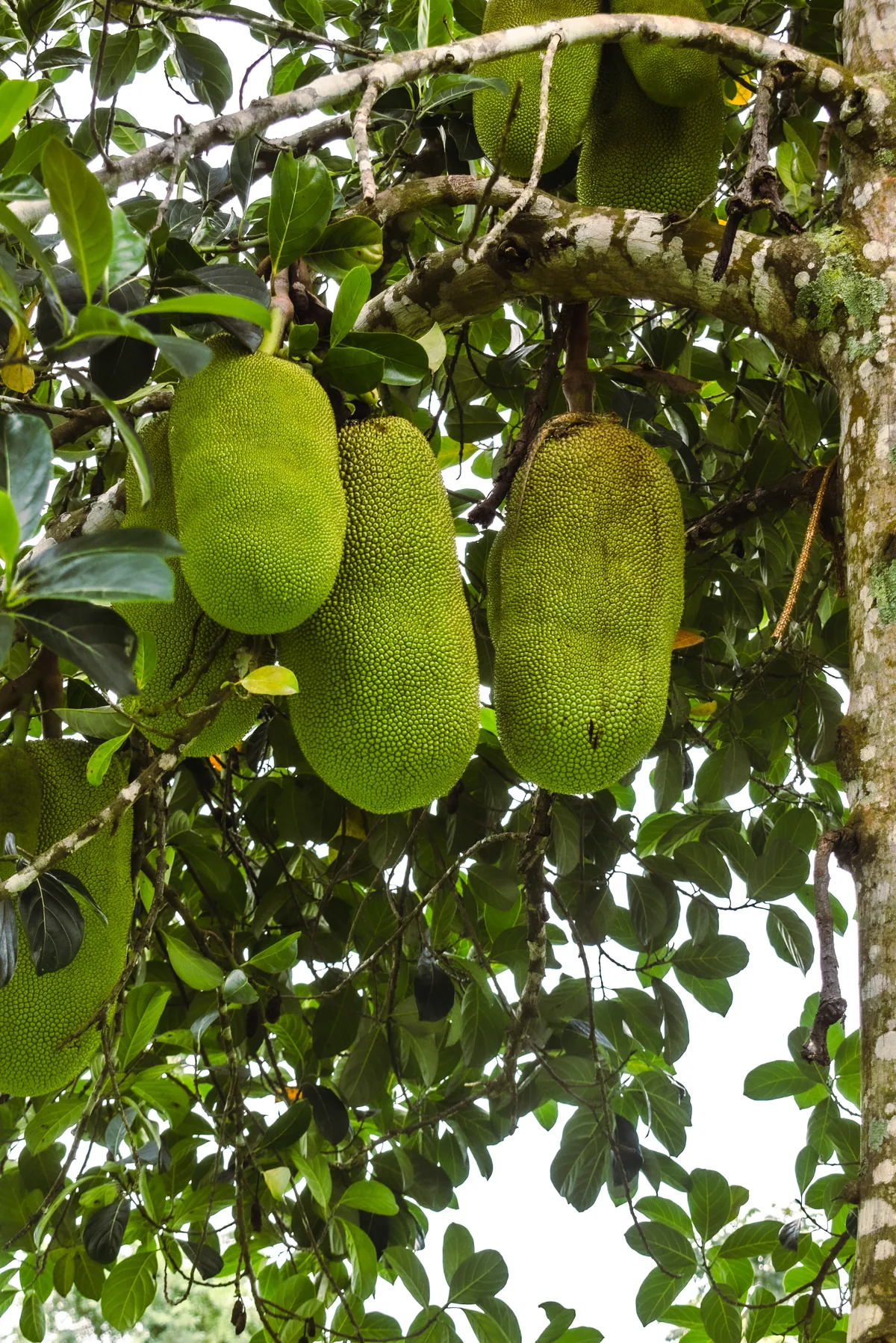
African breadfruit (Treculia africana) is a large, long-lived rainforest and forest-margin tree in the mulberry family, native to tropical Africa. It forms a broad crown of big, glossy, simple leaves and can reach roughly 30–40 m at maturity in ideal conditions, though container or orchard culture is usually much smaller. Female trees bear enormous, rough, green syncarps (compound fruit) packed with edible seeds valued where the species is cultivated. In subtropical and tropical Americas it belongs in the true tropical end of the range—think Keys, warmest coastal 10b/11, or Puerto Rico lowlands with reliable heat and humidity. It wants space, deep soil, and protection from cold snaps; humid summers are fine if drainage is honest. Full sun to bright broken sun once established for best vigor and fruiting potential. Deep, fertile, well-drained soil; steady moisture while young, then moderate water with a dryish spell tolerance in maturity compared with true swamp species—never let roots sit anaerobic. Seeds: sow fresh seed in warm, moist medium; germination can be slow and irregular—patience and bottom heat help in the cool season. Grafting or air-layering of known fruiting selections where material exists—preferred for predictable sex and fruit quality in a yard-scale planting. Harvest mature syncarps when the outer rind begins to yield and internal seeds are plump; processing is labor-heavy—plan kitchen time, not a five-minute snack. Seeds are the main food use; leaves and other parts are not the headline crop—treat this as a specialty canopy tree, not a lettuce substitute.
Permaculture Functions
- Edible: Treculia africana female trees bear massive syncarps packed with starchy seeds that need serious kitchen time after traditional detox steps -- this is a labor crop for communities that already know the processing rhythm, not a five-minute snack walk.
- Wildlife Attractor: Cream inflorescences and enormous green fruit heads pull beetles, flies, and mammals at the forest margin -- plan fencing or accept wildlife tax because fallen syncarps dent whatever sits under the limb.
- Shade Provider: Huge glossy leaves cast humid understory shade for cacao, vanilla vines, and ginger once the crown lifts above nurse plants -- sexed trees mean you keep a known male nearby for pollen without turning the yard into a pollen storm.
- Mulcher: Moraceous leaf litter builds a fast fungal duff layer under the drip line -- rake excess away from small seedlings so mulch does not steam their collars during monsoon weeks.
- Biomass: Annual prunings and spent bracts add bulky carbon to on-site compost and biochar pits -- decomposition runs year-round in humid climates.
- Ornamental: The sheer scale of foliage and fruiting heads reads as living architecture in botanical collections -- only plant where overhead lines and roofs tolerate eventual weight because branches carry serious mass.
Companion Planting
Threats & Pressure