About
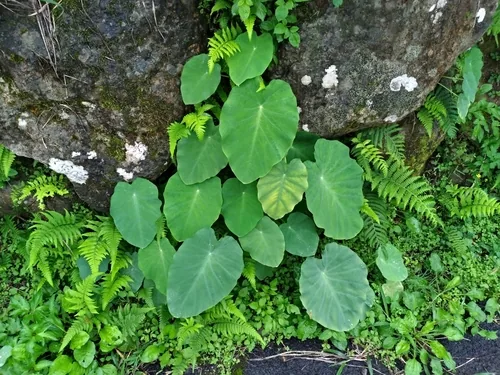
Eddoe is a small-corm, more drought-tolerant taro type than giant dasheen — still a tropical beast pretending it belongs in a temperate spreadsheet. It grows big, elephant-ear leaves and starchy corms used like potato or taro. In subtropical and tropical Americas you treat it as a long-season annual or lift corms before hard frost; humid summers are its happy place. Part sun to full sun; some afternoon shade helps in brutal heat. Consistently moist, rich soil for best corm bulk; tolerates brief wet feet better than true desert crops. Mulch heavily to hold moisture and feed the soil food web. Corm division: Split offsets when dormant in warm soil. Suckers: Separate pups from the mother clump at the start of the growing season. Not a beginner seed crop — buy known eddoe types, not random ornamental elephant ear. Dig corms after tops yellow or before first killing frost. Cure briefly in shade with airflow before storage. Leaves must be cooked; do not eat raw.
Permaculture Functions
- Edible: Colocasia esculenta eddoe types form many small corms -- boil or bake thoroughly; leaves need full cooking to break down calcium oxalate crystals.
- Ground Cover: Huge heart-shaped leaves shade wet beds -- cutting evaporation around bananas and papayas in humid plantings.
- Animal Fodder: Cooked or ensiled foliage can supplement livestock rations -- where regional practice supports safe handling.
- Mulcher: Spent tops chop-and-drop into constantly moist guilds -- feeding soil biology without importing off-site mulch.
Companion Planting
- Dry Mediterranean herbs that hate humidity