About
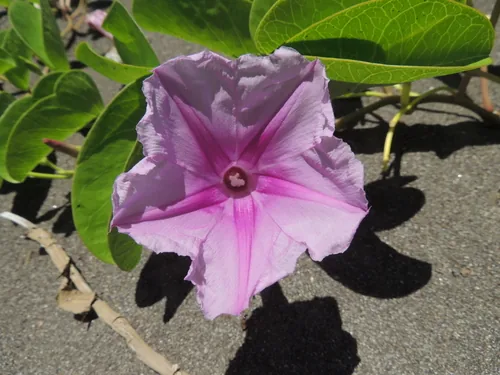
Beach morning glory (Ipomoea pes-caprae) is a pantropical perennial vine of upper beaches and frontal dunes, famous for running many meters along sand with succulent, bilobed leaves shaped like a goat’s hoof and large pink-purple trumpet flowers that open in morning sun. It is a primary sand-binding species in Caribbean, Gulf, Atlantic, and Pacific tropical coasts, tolerating salt spray, heat, and periodic burial. The plant rarely climbs tall supports, instead forming a low green ribbon behind the high-tide line. Full sun; requires excellent drainage and tolerates drought between coastal rains. Salt aerosols are normal; rinse is provided by storms. Inland use demands lean sand mixes and strict avoidance of overwatering; cold wet soils rot stems in marginal winters near 32°F (0°C). Root sections of stem with nodes buried in warm sand; keep moist until anchored. Sow seed after soaking overnight; transplant small plugs into restoration fabric if crabs are abundant. Avoid importing beach material across regions where this species is regulated. Not a standard food crop in modern gardens—historical uses exist but require expert knowledge. For restoration, trim to encourage lateral fill before storm season; remove smothered sections after wrack deposits if mats lift and dry.
Permaculture Functions
- Erosion Control: Ipomoea pes-caprae bilobed leaves and long runners root at nodes to knit foredunes against northeaster scarping -- burial by storm sand often survives if growing tips stay connected to moist sand below.
- Ground Cover: Low ribbon of succulent foliage catches windblown wrack fines that feed the next successional band -- inland pots need lean mix and drought honesty or stems rot from kindness.
- Ornamental: Morning pink-purple trumpets open fresh on goat-hoof leaves for photos before noon fade -- not the fence-climbing sweet potato mistake if you sourced true coastal ecotype.
- Wildlife Attractor: Nectar feeds hawkmoths and native bees -- mats shelter beach wolf spiders and hatchling routes where foot traffic is actually controlled.
Companion Planting