About
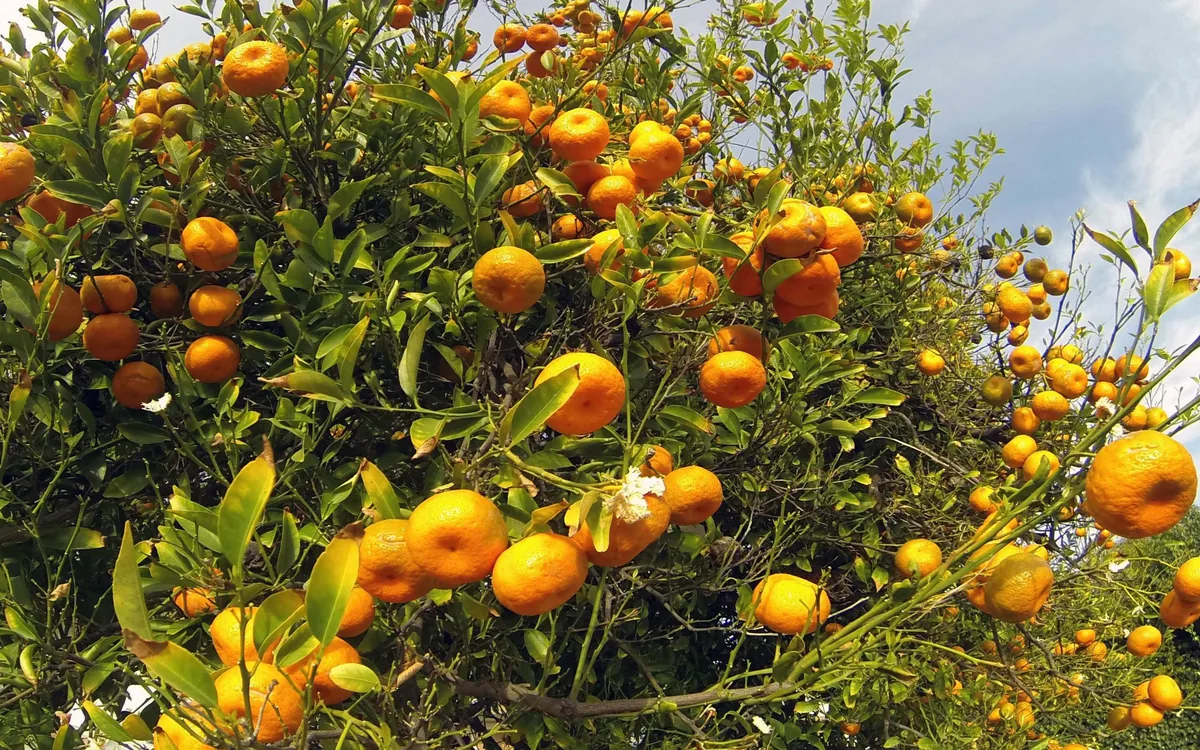
The tangerine tree is a small to medium-sized evergreen, typically reaching heights of 4.5–6 meters (15–20 feet). It bears glossy, lance-shaped leaves and fragrant white flowers that give way to bright orange, easily peelable fruits. Tangerines thrive in full sun and well-draining, slightly acidic soils. They require regular watering, especially during dry periods, but are sensitive to waterlogged conditions. Tangerines are commonly propagated through grafting onto rootstocks, which ensures disease resistance and desired fruit characteristics. They can also be grown from seeds, but seedlings may not produce true-to-type fruit. Tangerine trees require full sun exposure, receiving at least 6–8 hours of direct sunlight daily. They prefer consistent moisture but need well-draining soil to prevent root rot. The fruits are typically ready for harvest from late fall to early spring. Mature tangerines should be firm and heavy for their size, with a deep orange color. They do not continue to ripen after picking, so ensure they are fully mature before harvesting.
Permaculture Functions
- Edible: Citrus reticulata loose-skinned mandarins peel one-handed on porch steps -- acid drops late fall when navels still hang green on neighboring trees.
- Pollinator: Sweet white citrus bloom oils sync with early bee flights through humid subtropical orchards -- before summer heat shuts nectar quality.
- Wildlife Attractor: Sparrows and peel-focused raccoons patrol dropped fruit under backyard canopies -- while parasitic wasps hunt leafminer larvae in the same foliage.
Companion Planting
Also mentioned as companions:
- Petunia
Not yet profiled in PermiePortal
- None specified
Threats & Pressure