About
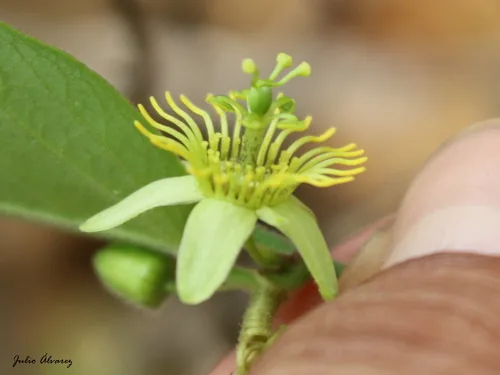
Corkystem passionflower (Passiflora suberosa) is a wiry native vine in the passionfruit family, named for the corky, ridged stems on older growth. It climbs or scrambles through fence lines and rough ground from the southern United States through the Caribbean and into tropical mainland America, bearing small ornate flowers and marble-sized fruit. The plant is a workhorse for wildlife guilds: it is a larval host for fritillary butterflies, offers nectar to small pollinators, and fits food forests where you want a tough, low-input climber rather than a pampered orchard vine. Full sun to partial shade; flowers best with good light. Drought-tolerant once established on well-drained soils; tolerates lean sand or rocky edges. Avoid chronic wet feet—root rots appear when drainage is poor. Hardy only to light frost; protect young plants below about 20°F (-7°C) until wood hardens. Seeds: soak overnight, sow warm, and expect variable germination over several weeks. Cuttings: take semi-hardwood tips in warm weather, use well-drained mix, and keep humidity moderate until roots form. Ripe fruit can be nibbled fresh when fully colored and soft; flavor is tart and variable. For habitat value, leave plenty of foliage for caterpillars through the growing season. Prune after fruiting if you need to restrain spread on trellises.
Permaculture Functions
- Edible: Marble-sized purple-black berries are tart-sweet when fully soft -- treat as a trailside nibble, not a bulk market fruit.
- Wildlife Attractor: Passiflora suberosa leaves host gulf fritillary and zebra longwing larvae -- expect holes if you promised butterflies a buffet.
- Pollinator: Miniature green-and-purple flowers offer nectar and pollen to small native bees -- along fence lines and scrub edges.
- Ground Cover: Wiry stems sprawl low and root at nodes -- carpeting rough sand and rock pockets before they climb for light.
- Pest Management: Caterpillar load concentrates on this native vine instead of on your passiflora edulis -- if you plant both with intent.
Companion Planting
- Passiflora caerulea and other ornamental passionflowers may hybridize or confuse plantings—label collections if you breed or collect seed