About
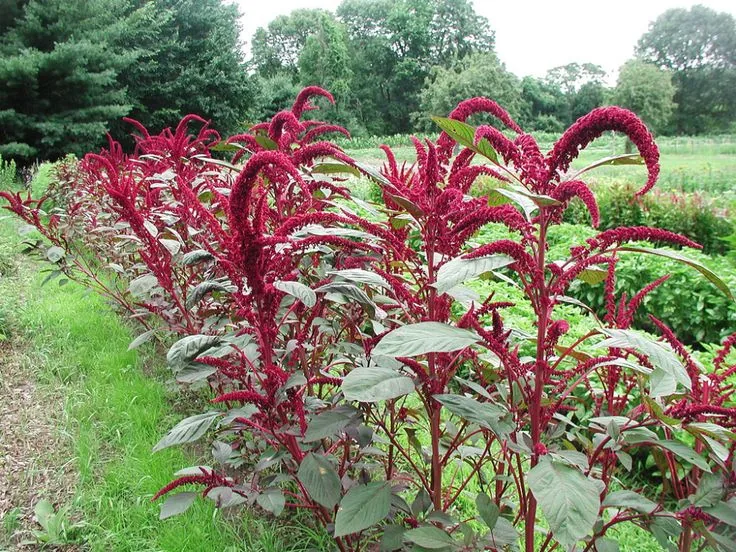
Amaranth (*Amaranthus spp.*) is a versatile annual plant known for its vibrant foliage and nutrient-rich seeds and leaves. Depending on the species, it can grow between 0.5 to 2.5 meters (1.6 to 8.2 feet) tall, featuring broad, lance-shaped leaves that may exhibit green, red, or purple hues. The plant produces striking, dense flower spikes that can be upright or trailing, with colors ranging from deep red to gold. Amaranth is highly adaptable, thriving in a variety of soil types, including those with low fertility, and is notably drought-tolerant once established. Amaranth is propagated by direct seeding. Sow seeds at a depth of 1 to 1.5 centimeters (0.4 to 0.6 inches) in well-drained soil after the last frost when soil temperatures are consistently above 18°C (65°F). Seeds typically germinate within 3 to 7 days under optimal conditions. Amaranth thrives in full sun, requiring at least 6 to 8 hours of direct sunlight daily. While it is drought-tolerant once established, providing consistent moisture during germination and early growth stages promotes optimal development. Avoid waterlogged conditions, as they can impede growth. For leafy greens, harvest young leaves when they reach approximately 5 to 10 centimeters (2 to 4 inches) in length, typically 20 to 30 days after planting. For grain production, harvest seed heads when they have matured and begun to dry, usually 90 to 120 days after planting. Cut the stalks and allow them to dry further before threshing to separate the seeds from the chaff.
Permaculture Functions
- Edible: Grain-type Amaranthus selections yield tan to golden seeds you pop like miniature quinoa while leaf amaranths give mild spinach-like greens before flowering -- harvest young leaves at 10 cm or they shift from tender to fibrous overnight.
- Medicinal: Bitter teas from leaves show up in Mesoamerican and Asian records for inflammation and digestion support -- chemistry varies by species, so treat research as mandatory before therapeutic dosing.
- Dynamic Accumulator: Fast taproots mine potassium and phosphorus from subsoil and stash it in neon foliage that reads as fertilizer when chopped before seed rain -- timing matters because thick stems tie up nitrogen if buried green in tight C:N piles.
- Erosion Control: Dense stands knit roadside cuts and garden berms during monsoon bursts where bare soil would wash -- roots stay annual, so follow with perennial anchors before the site re-erodes next season.
- Animal Fodder: Leafy types make high-protein poultry forage when cut before flowering -- grain heads finish finches and chickens if you leave windfall rows after human threshing.
- Ground Cover: Colonies tile between taller crops during the warm gap, shading soil and outcompeting pigweed cousins until frost ends the cycle -- cut before seed shatter if volunteers are unwelcome.
Companion Planting