About
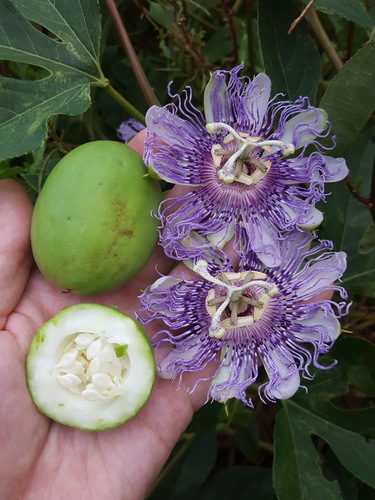
Wild passionvine (Passiflora incarnata) is a herbaceous to semi-woody tendril vine of field edges, fencerows, and sunny thickets across the eastern and southeastern United States. Intricate lavender fringed flowers appear in summer, followed by egg-sized fruits that ripen yellow and pop when stepped on—hence maypop. Larvae of several fritillary butterflies specialize on the foliage, making this a non-negotiable plant for native butterfly gardens. ☀️💧 Sun and Water Requirements: Full sun for heaviest flowering and fruiting; tolerates bright part shade with fewer fruits. Average moisture suits it; tolerates short drought once roots run deep. Heavy clay that stays wet in winter can rot crowns in cold zones—slope or amend. ✂️ Propagation: Sow seed after soaking and scarifying; germination improves with warmth. Layer stems that touch soil; divide crowns in early spring. Transplant dormant roots carefully—sprouts late, grows fast once heat arrives. 🌾 Harvest / Best Use Timing: Collect fallen ripe maypops when fragrant and yielding; scoop pulp for jelly or out-of-hand eating if acidity suits you. Leave foliage for caterpillars during butterfly flight periods; prune hard in late winter to renew growth.
Permaculture Functions
- Edible: Ripe fruit pulp is tart-sweet and used in jams and drinks; unripe fruit is not the snack you want.
- Pollinator: Complex flowers attract bees and other pollinators; architectural blooms support insect diversity visually and nutritionally.
- Wildlife Attractor: Foliage feeds fritillary larvae; fruits feed mammals and people who tolerate seeds.
- Ornamental: Flowers are living geometry lessons on trellises and mailbox posts.
Practitioner Notes
- If leaves look like lace, congratulations—you are running a butterfly cafeteria; buy another trellis, not poison.
- Maypops earned the name: you will find them via ankle-based detection if you walk barefoot—fair warning.
- Flowers look engineered by aliens; pollinators act like they agree.
- Cold winters kill tops; roots often survive to zone 6 pockets—mulch crowns if you gamble northward.
Companion Planting
- Elderberry — tall fast shrub provides rough trellis and afternoon shade at vine base in edges
- Purple Coneflower — shared sunny meadow aesthetic; coneflower stays upright while vine weaves fence
- Butterfly Weed — adult butterfly support alongside larval host leaves on passionvine; staggered bloom times
- Caterpillar defoliation — plan for chewed leaves as a success metric, not a crisis
- Spreading suckers — contain with mowing strips or deep edging in small yards
Pest Pressure