About
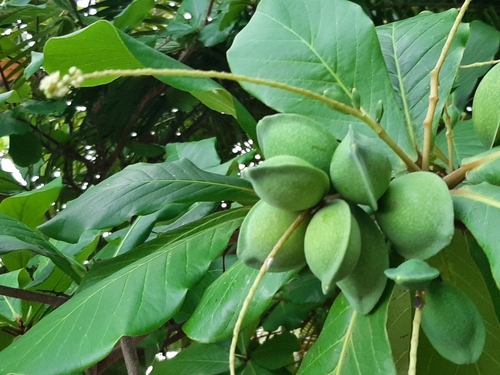
Beach almond (Terminalia catappa) is a large, spreading tropical tree of coastal strand and lowland areas in many warm regions, valued for dense horizontal tiers of glossy leaves that color bronze-red before dropping, and for fibrous fruit kernels eaten roasted or incorporated into snacks. Heights of 40–60 feet (12–18 m) are common with a broad crown that casts deep shade; roots are strong enough for coastal wind. In food forests near shorelines it is a salt-tolerant canopy anchor—plan understory for shade, not sun-loving vegetables, once the crown matures. ☀️💧 Sun and Water Requirements: Full sun for symmetrical crowns; tolerates coastal exposure and sandy soils. Young trees need steady moisture to establish deep roots; mature specimens endure seasonal dry spells but fruit better with occasional deep irrigation. Avoid planting where litter drop will clog critical drainage structures you refuse to maintain. ✂️ Propagation: Sow fresh seed; viability drops if kernels dry too long. Air-layering works on mature limbs in humid weather. Select local coastal ecotypes when possible for salt and wind performance. 🌾 Harvest / Best Use Timing: Collect fallen fruit when husks color and begin to dry; crack shells to roast kernels. Leaves drop seasonally—use as mulch or compost feedstock. Prune for clearance along paths and structures before low branches become head hazards.
Permaculture Functions
- Edible: Kernels roast like snack nuts; verify preparation guidance for your cultivar and region.
- Shade Provider: Wide crown cools yards, livestock pens, and understory spice plantings.
- Windbreaker: Coastal plantings buffer trade winds that shred lesser trees.
- Ornamental: Tiered branching and red fall foliage beat ornamental grass hype on hot sites.
- Wildlife Attractor: Flowers and fruit feed birds and insects where trees are part of local food webs.
Practitioner Notes
- Leaf drop is a seasonal mulch delivery service—rake only if you enjoy sweating for landfill fuel.
- Salt spray tolerance is good, not magical—seedlings still want protection the first year.
- Kernels vary in bitterness; taste-test roasted samples before scaling up gifts.
- Wide crown needs real spacing; do not park it three feet from eaves unless you love gutter archaeology.
Companion Planting
- Lemongrass — tough clumping herb handles root competition at the dripline in tropical yards
- Papaya — soft-stemmed undercanopy uses early light until Terminalia spreads wide
- Turmeric — shade-tolerant rhizomes along the north side with deep mulch
- Surface roots and litter — sidewalks and shallow utilities may argue with mature trees
Pest Pressure