About
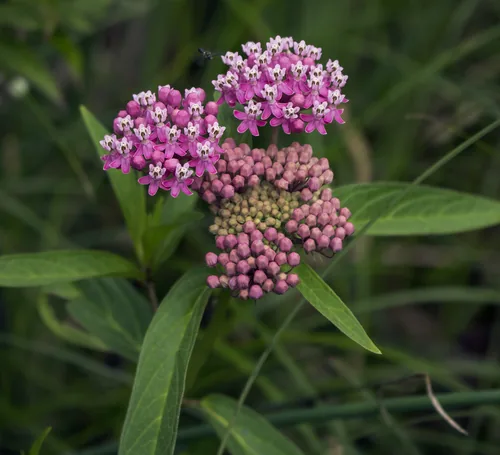
Swamp milkweed (Asclepias incarnata) is a native North American milkweed with upright stems, lance-shaped leaves, and rounded clusters of fragrant pink flowers that scream “monarch brunch.” Plants commonly reach 3–5 feet in moist settings, forming clumps from fibrous roots and politely spreading where soil stays damp. subtropical and tropical Americas: This species shines in rain gardens, pond margins, and bioswales across subtropical Florida—wet summers are basically its personality. In Puerto Rico, match it to similarly moist, sunny edges; ensure drainage does not flip to anaerobic muck in the lowest spots. It is a functional native bridge plant, not a turf replacement on a dry berm. Full sun for strongest bloom and upright habit; light shade only if water is reliable. Likes consistent moisture; tolerates brief flooding better than drought—mulch helps even moisture in sand. Sow seeds in fall outdoors or cold-stratify 30 days before spring sowing; milkweed fluff is nature’s chaos—contain it. Divide dormant crowns in early spring; keep divisions moist until new shoots anchor. Leave flowers for pollinators; collect seed when pods split on the plant if you want to propagate responsibly. Cut back dead stems in late winter to leave overwintering insects hotel space—lazy gardeners win here.
Permaculture Functions
- Pollinator: Asclepias incarnata dusty-pink umbels drip nectar along pond lips -- when upland Asclepias tuberosa refuses wet feet.
- Wildlife Attractor: Monarch caterpillars strip leaves to lace -- cluster five or more stems so larvae finish without starvation drama.
- Water Retention: Rhizomatous roots bind anaerobic muck -- while rooting zone pulls nitrate pulses from fertilizer drift before water leaves the wetland cell.
Companion Planting
- Cattail — tall clones shade out milkweed in shallow pond margins where light is already scarce.
- Johnsongrass — aggressive rhizomes and allelopathic habits invade moist ditches and bully slower perennials.