About
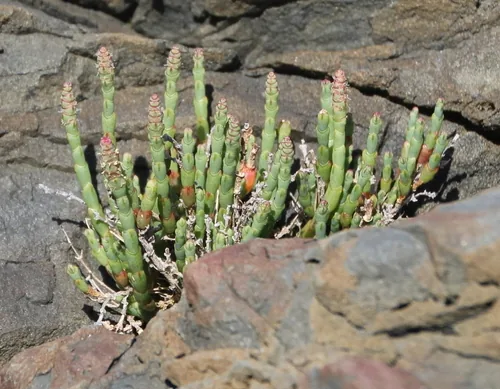
Glasswort is a jointed, succulent halophyte you find in salt marsh and brackish edges — the kind of plant that laughs while your lawn grass throws a tantrum in saline soil. Young tips are salty-crisp and edible raw or pickled; older stems get woody. A niche edible for coastal and brackish food systems, not a row-crop fantasy. Full sun; needs high light to stay compact. Wet to moist, poorly drained salty or brackish soils; do not try to drought-stress it like a Mediterranean herb. Tolerates periodic inundation; hates drying out in hot wind without salt-marsh humidity. Seeds: Sow in spring in damp, salty growing media; germination can be slow and irregular. Tip cuttings: Root in humid conditions for quick clonal increase. Transplant small clumps from permitted collection sites only — check local coastal harvesting rules. Snip tender tips in spring and early summer before stems lignify. Harvest from clean sites only; salt marsh can hide runoff issues you do not want on the plate.
Permaculture Functions
- Edible: Salicornia jointed tips snap crisp for pickles when clipped spring ebb before inner hollow lignifies -- sodium chloride taste is honest salinity cue so harvest only from clean marsh boards you already tested for road runoff signatures.
- Ground Cover: Succulent mats tile intertidal zone between mangrove pneumatophores where upland herbs die once soil EC meters read oceanic on the same brackish ditch banks glasswort volunteered beside dying St -- augustine you finally stopped forcing.
- Wildlife Attractor: Red glasswort patches fuel migratory waterfowl fattening on Atlantic flyway mudflats -- when seed heads mature before October cold fronts push birds south past impoundments you manage with drawdown calendars not guesswork.
Companion Planting
- Dry xeric companions that need sharp drainage