About
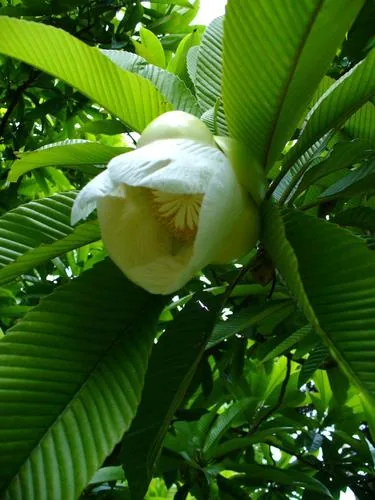
Elephant apple (Dillenia indica) is a tropical tree of Asian lowland forests and village margins, bearing large oblong leaves, showy fragrant flowers, and green woody fruits the size of small melons that require culinary skill. In cultivation it often reaches 30–50 feet (9–15 m) with a rounded crown. It suits humid tropical food forests as a shade tree and seasonal fruit crop where elephants—or humans with recipes—know what to do with the hard, sour fruit. Full sun for flowering and fruiting once established; young plants appreciate light shade in blazing equatorial sites. Likes deep, moist, well-drained soils rich in organic matter; tolerates brief dry periods in humid air but not long drought on sand without irrigation. Wind protection helps large leaves avoid tattering during squalls. Sow fresh seed warm after removing pulp; viability drops if seed desiccates. Air-layering or grafting is used where superior fruit lines exist. Prune for a single leader in windy sites; open vase forms reduce wind sail on spreading crowns. Fruits are harvested mature green for pickles and curries in traditional cuisines—raw casual tasting is not the move. Flowers can be abundant; manage nutrient budgets if alternate bearing appears. Mulch fallen leaves—they are large and make honest biomass if you chop them.
Permaculture Functions
- Edible: Dillenia indica green woody fruits need regional cooking to tame sour tannin -- pickles, curries, and chutneys use the acidic flesh once seeds and fibrous core are handled like a carpentry project, not a raw snack.
- Wildlife Attractor: Lemon-scented dinner-plate flowers pull large beetles and bees in Asian lowland forests -- while fallen fruit still feeds village pigs and wild boar where historic megafauna dispersal gaps exist.
- Shade Provider: Rounded 30-50 foot crowns cast understory shade for bananas, cacao-class companions, and ginger guilds -- in humid zone 10-13 food forests with reliable monsoon moisture.
- Mulcher: Huge oblong leaves drop fast-decaying litter that rebuilds organic matter on sandy tropical orchard floors -- when crews rake and chip material back under drip lines after storms.
Companion Planting
- Frost — not a subtropical tourist; sustained cold kills expanding tissue fast
- Large fruit drop — site away from fragile roofing and naive foot traffic