About
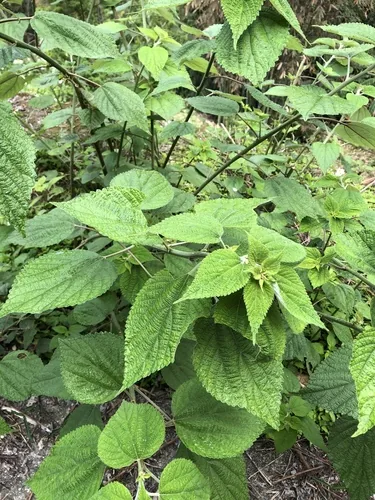
Ramie (Boehmeria nivea) is a long-lived, clumping perennial in the nettle family, grown for lustrous bast fiber and prodigious leafy biomass. Plants form upright stems from rhizomes, often 1–2.5 m tall in a long season, with bold toothed leaves that read “industrial hemp’s elegant cousin.” It is native to eastern Asia and has been cultivated for millennia for textiles and cordage. In subtropical and tropical Americas, ramie behaves like a subtropical workhorse: it can resprout after light frost if crowns stay well drained, but waterlogged winter soil invites crown rot. Humid summers suit rapid growth; intense drought shrinks stems and coarsens fiber. Full sun to light shade; more sun generally yields taller, stronger stems. Rich, moist, well-drained soil; consistent moisture during the growing season gives softer bark for stripping. Drought stress reduces yield and leaf quality. Rhizomes spread—contain the clump or plan islands so it does not annex neighboring beds. Stem cuttings taken during active growth root readily in humid shade. Divide mature clumps in spring when new shoots emerge; replant divisions with compost. Rhizome sections with buds can establish new plants—site deliberately because they travel. Harvest stems for fiber when lower leaves yellow but stems are still green and before lignification advances; timing varies by climate and cultivar. For mulch and chop-and-drop, cut leafy growth during peak vigor and lay as green manure away from crops sensitive to allelopathy until partly wilted.
Permaculture Functions
- Fiber: Boehmeria nivea bast strips after decortication yield lustrous “China grass” yarn stronger wet than cotton for nets, fine shirts, and banknotes in historic mills -- expect alkali boiling and scraping labor machines still have not erased.
- Mulcher: Multiple leafy harvests per season supply potassium-rich chop-and-drop under fruit trees when chipped fine enough to avoid matting -- wear gloves because leaf hairs irritate skin like nettle lite.
- Dynamic Accumulator: Rhizomatous roots explore subsoil moisture lenses and return calcium and silica to surface litter after each cut -- contain clumps with buried barrier or island beds because rhizomes travel farther than optimistic labels admit.
Companion Planting
- Waterlogged winter crowns
- Letting rhizomes colonize neighbor beds without consent