About
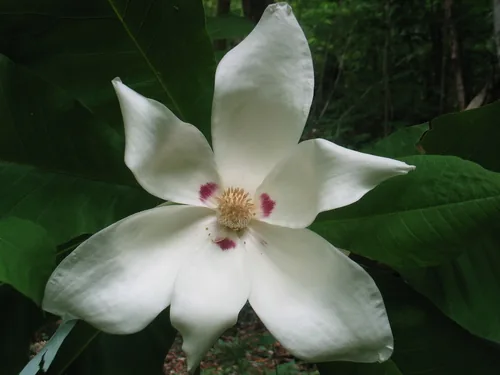
Bigleaf magnolia (Magnolia macrophylla) is a deciduous tree of moist eastern North American forests famous for leaves that can exceed 20 inches (50 cm) in length, with silvery undersides that flash in wind. Creamy, fragrant flowers up to a foot across open in late spring, followed by cone-like fruits with scarlet seeds. Mature trees often reach 30–40 feet (9–12 m) in cultivation, shorter in the wild understory, and they bring instant rainforest drama to large lots, parks, and woodland gardens with deep organic soil. Partial shade to full sun in climates with adequate soil moisture; young trees scorch in hot dry exposures without irrigation. Deep, moist, well-drained, acidic loam high in organic matter is ideal; root collars must stay cool. Mulch widely; avoid compacted root zones under pavement. Sow fresh seed after removing red coat; never allow seed to dry completely. Warm stratification followed by cold may improve germination in some seed lots. Grafting of superior forms is practiced by specialists; seedlings vary in flower size. Ornamental use peaks at bloom; collect seeds when follicles split and show red arils if propagating. Prune only for clearance or damaged wood—central leader form is often best left natural. Rake thick leaf drops if they smother delicate ground-layer plantings.
Permaculture Functions
- Ornamental: Magnolia macrophylla leaves pass 50 cm with silver undersides that flash in breeze while foot-wide fragrant flowers open late spring -- specimen trees read rainforest even in Appalachian foothills.
- Shade Provider: Broad deciduous crown cools hostas, ferns, and hydrangeas through humid summers -- root collars need wide mulch, not compacted parking lot pie over shallow roots.
- Wildlife Attractor: Beetle-pollinated flowers reek faintly to right pollinators while red arils feed thrushes when follicles split -- collect seed fast if propagation matters because squirrels keep receipts.
- Mulcher: Single-season leaf drop dumps deep acidic mats that feed mycorrhizae under oak partners -- rake paths only where ankle-deep litter trips humans, not every forest cosplay inch.
Companion Planting
No companion data yet.
Also mentioned as companions:
- Hosta
- Christmas Fern
- Tulip Tree
Not yet profiled in PermiePortal
- Wind — large leaves tear; avoid narrow wind-tunnel courtyards
- Drought on sandy berms without irrigation — leaf scorch and stunted growth