About
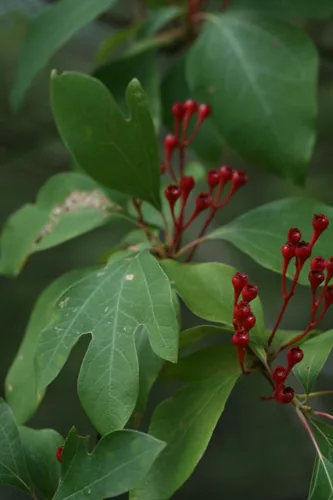
Sassafras albidum is the mitten-leafed native that smells like candy and history when you crush twigs. Dioecious-ish in practice (male and female flowers on separate trees), it suckers into cheerful colonies and is a classic early-succession edge species. Root tea and safrole chemistry got tangled in regulatory theater — do your own homework before marketing 'traditional' beverages. Full sun to part shade; tolerates forest edge life. Prefers moist, fertile, well-drained soils but handles lean sand better than pampered exotics. Drought tolerance improves with age. Root suckers transplant if you tame the taproot ego. Seeds need prompt sowing; viability drops if they desiccate. Young leaves for filé (dried, powdered sassafras leaf in gumbo tradition) where culturally and legally appropriate — not a medical prescription, just kitchen anthropology.
Permaculture Functions
- Edible: Sassafras albidum dried young leaves become mild filé powder for long-simmered pots where Cajun and Creole cooks already respect the tradition -- ignore internet root-tea nostalgia unless your lawyer is on speed dial.
- Wildlife Attractor: Dioecious trees scatter dark blue drupes on female stems for thrushes -- while early spring flowers fuel specialist bees along disturbed woodland edges.
- Medicinal: Fat-soluble safrole concentrates in bark and roots triggered regulatory bans on commercial root beer routes -- coordinate statutes and clinicians before reviving folk decoctions for sale or daily therapeutic doses.
- Mulcher: Mitten-shaped leaves drop fast-decaying litter along suckering colonies so chop-and-drop beside pawpaw rows feeds fungal chains -- without hauling imports.
Companion Planting
- Livestock binge-eating large amounts of plant material without context
- Expecting heavy fruit if you only planted males — pollination realities