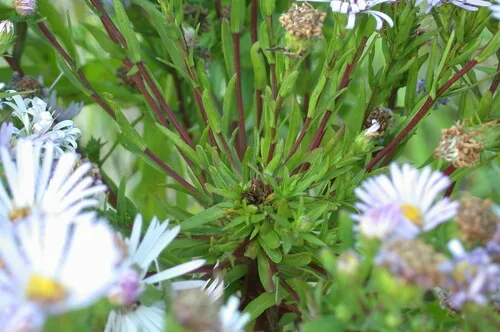
Field Identification
If leaves look dusty, speckled, bronzed, or curled without obvious chewing, cyclamen mite is a likely suspect. Mites are tiny but can multiply fast, especially during heat and dry air. Plants lose vigor as feeding drains cell contents from leaves and tender growth. Early action matters, because heavy infestations can spread through a bed in days.
Use a hand lens and check leaf undersides first, especially near veins and new growth. Look for pinprick stippling, fine webbing in some species, and tiny moving dots that range from pale to red or brown. Tap a leaf over white paper; moving specks suggest active mites. Stippled leaves plus mites or eggs clustered under foliage confirms the diagnosis.
Not sure what you have? Use the symptom diagnosis tool →
How to Deal With It
Organic Control Methods
Amblyseius californicus and Neoseiulus cucumeris predatory mites attack cyclamen mites in enclosed production environments -- release preventively before damage peaks for best results. These are available commercially and establish well when introduced early with adequate humidity above 60%. For outdoor plants, conserve generalist predators by avoiding unnecessary broad-spectrum sprays. Cyclamen mites are extremely small -- 1/100 inch -- and live deep in plant tissue where most predators cannot reach them effectively.
Cyclamen mites cause distinctive distorted, stunted, and thickened new growth -- leaves curl downward and inward, new shoots are twisted and misshapen. Unlike spider mites, there is no webbing. The damage looks like herbicide injury or viral disease. Use a strong hand lens to confirm -- cyclamen mites are almost invisible to the naked eye and cluster in protected growing points. Buy only certified mite-free strawberry crowns and ornamental transplants. Work from clean to dirty blocks in the greenhouse -- cyclamen mites transfer easily on hands, tools, and clothing.
Hot water treatment of strawberry crowns at 111F (44C) for 30 minutes kills cyclamen mites without damaging crowns -- standard practice in commercial strawberry production for clean stock. Discard severely infested plants rather than treating -- heavily infested plants spread mites faster than treatment can control them. Isolate infested benches immediately. Dip pruners and tools in 70% isopropyl alcohol between plants and varieties. Lower temperature extremes in greenhouses reduce cyclamen mite reproduction rates.
Isolate infested plant batches immediately -- cyclamen mites transfer on hands, tools, clothing, and air movement in greenhouses. Avoid working wet plants where mites stick to tools and spread easily. Remove and destroy severely infested growing tips to reduce mite populations and sources of spread.
Sulfur dust or spray applied early at first sign of distortion suppresses cyclamen mite populations -- apply every 5-7 days and cover growing points thoroughly where mites concentrate. Horticultural oil smothers mites on accessible plant surfaces. Insecticidal soap on ornamentals where labeled -- strawberries require label caution on timing relative to harvest. Repeat applications are essential because eggs are protected deep in plant tissue and hatch continuously.
Let Nature Handle It
Natural Enemies
- Neoseiulus cucumeris
- Amblyseius californicus
- Minute Pirate Bugs
Threat Map