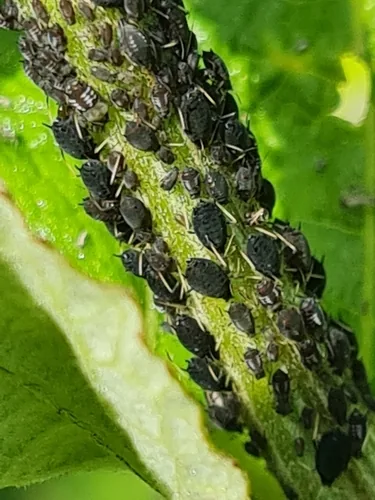
Field Identification
If new growth is curling, yellowing, sticky, or chewed, bean aphid may already be on the plant. This pest often builds quietly, then damage appears all at once. Feeding stress weakens growth, reduces yield, and opens the door to secondary disease. Early cleanup is much easier than fighting a full population surge later.
Inspect the newest growth first: leaf undersides, flower buds, stem joints, and tender tips where pests gather. Look for body shape, color, eggs, cast skins, honeydew, webbing, or fresh puncture marks. A hand lens and a white paper tap test help reveal small life stages. Matching visible pests with fresh plant damage confirms active infestation.
Not sure what you have? Use the symptom diagnosis tool →
How to Deal With It
Organic Control Methods
Lady beetles, syrphid fly larvae, lacewing larvae, and parasitic wasps (Aphidius spp., Aphelinus spp.) are already present in most gardens and attack bean aphid actively. Do nothing for 2-3 days after first spotting bean aphids -- natural enemies are likely already responding. Spraying anything, even water, can kill arriving predators and make the problem worse. Plant dill, fennel, and sweet alyssum nearby to sustain parasitoid wasp populations. Bean aphids are born pregnant and a colony can double in 4-5 days in warm weather -- if predators are not present and the colony is on new growth, act immediately.
Bean aphids are shiny black and cluster densely on new shoot tips, stem joints, and the undersides of young leaves -- easy to spot and confirm. They favor soft succulent growth caused by excess nitrogen -- overfeeding with fertilizer produces an aphid buffet. Winged forms disperse in warm weather and colonize new plants. Check bean plants weekly from transplant through pod fill. Ants farming aphid colonies protect them from predators and signal an established infestation that needs intervention.
Remove and bag heavily infested shoot tips -- this removes the colony center and the ants tending it before they disperse. Avoid excess nitrogen which produces the soft growth bean aphids prefer. Manage ant access with sticky trunk barriers on climbing beans and standard barriers on bush types. Interplant with garlic, chives, and strong-smelling herbs at bed edges to confuse aphid navigation. Remove nearby weed reservoirs -- lambsquarters, dock, and mustards host early aphid flights that later colonize beans.
A strong water spray dislodges colonies from new growth -- bean stems are sturdy enough to handle this. Repeat every 2-3 days for 2 weeks. Clip and bag heavily infested shoot tips rather than trying to spray individual insects off crowded stems. Sticky yellow traps monitor winged aphid movement into the planting.
Insecticidal soap (1-2 teaspoons castile soap per quart water) kills aphids on direct contact -- coat stem joints and leaf undersides thoroughly where colonies cluster. Reapply every 3 days while migrations continue. Apply at dusk to protect beneficial insects. Neem oil disrupts reproduction and deters new arrivals. Avoid spraying open bean flowers where pollinators are active -- spray in early morning or evening only.
Let Nature Handle It
Natural Enemies
- Aphidius spp. (Braconidae)
- Lady Beetles (Coccinellidae)
- Syrphid Fly Larvae (Syrphidae)
- Lacewing larvae (Chrysopidae)
Threat Map