About
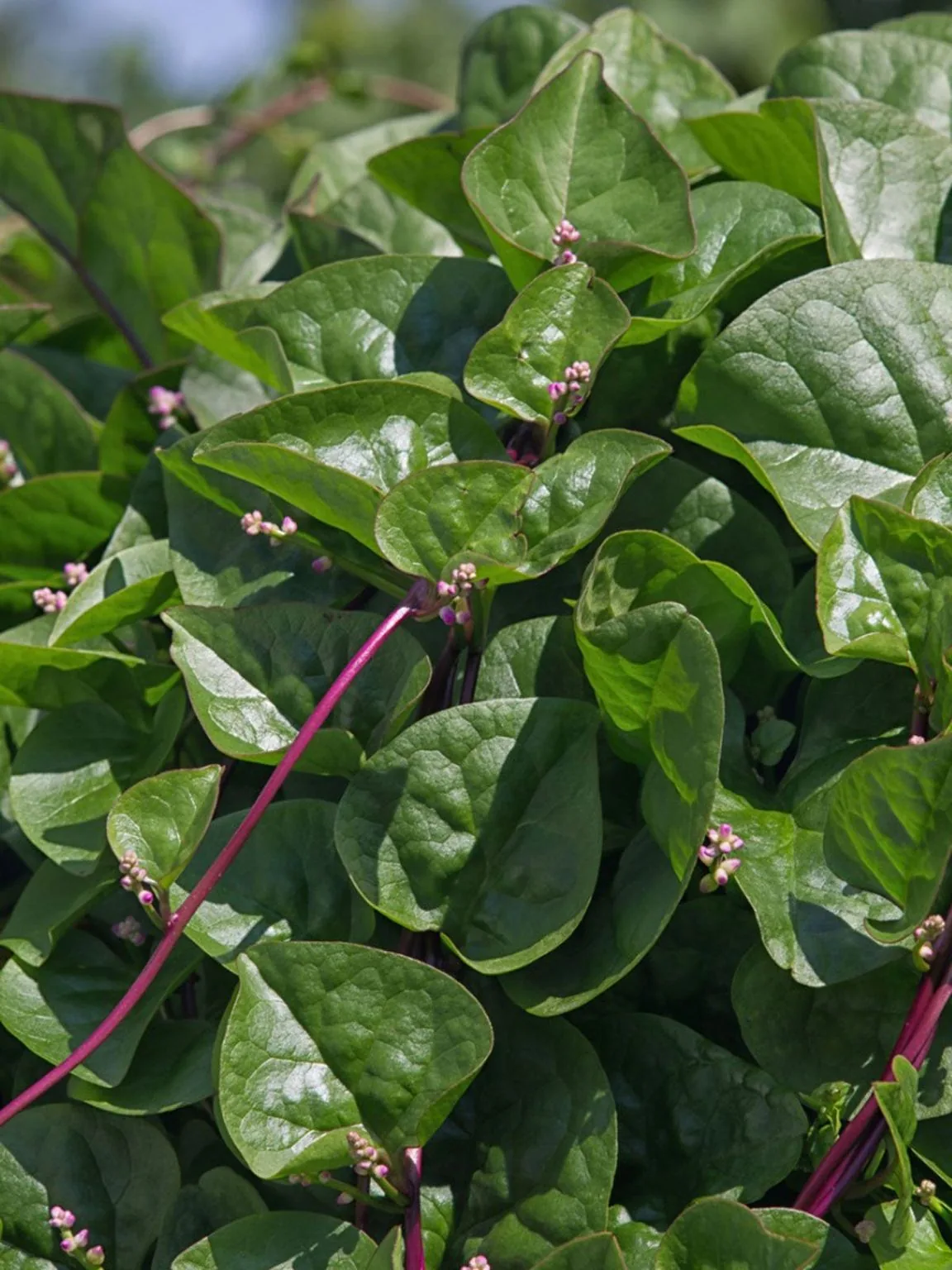
Malabar Spinach (Basella alba) is a fast-growing, climbing vine with thick, fleshy, green or purple stems and dark green, heart-shaped leaves. Unlike traditional spinach, it thrives in hot, humid climates and is a popular leafy green in tropical regions. It has a slightly mucilaginous texture, making it useful for soups and stir-fries. The plant grows best on trellises or fences, where it can climb and produce an abundance of edible leaves. It is also a great summer alternative to traditional spinach, which struggles in heat. In cooler climates, it can be grown as an annual. Prefers full sun but tolerates partial shade. Thrives in warm, humid conditions and requires regular watering. Prefers well-draining, loamy, or sandy soil with high organic matter. Seeds: Soak seeds overnight and plant directly in warm soil; germination may take 7-14 days. Cuttings: Propagates easily from stem cuttings rooted in water or soil. Layering: Stems that touch the ground may root naturally. Leaves can be harvested continuously once the plant reaches 30 cm (12 inches) in height. Regular harvesting encourages bushier growth. Avoid harvesting too much at once to maintain plant vigor.
Permaculture Functions
- Edible: Basella alba leaves are mild and mucilaginous, ideal for soups and stir-fry in humid heat where true spinach bolts -- eat leaves steamed or quick-wilted; raw texture is slicker than lettuce expects.
- Medicinal: Mucilage soothes irritated GI lining in some Asian traditions -- keep use as food-medicine soups unless a practitioner steers stronger extracts.
- Wildlife Attractor: Purple berries along vining stems feed songbirds -- clip vines before seed if volunteers along fence lines violate neighbor diplomacy.
- Mulcher: Succulent tops chop-and-drop fast in hot compost -- balance with browns because high water content can go anaerobic in unturned piles.
- Dynamic Accumulator: Fast summer growth pulls potassium into juicy tissue that returns when vines are slashed before frost -- follow with heavy-feeding cucurbits next season.
- Erosion Control: Stems root at nodes along slopes when trellised diagonally -- useful on terraced beds if you anchor trellis feet so vines do not slide downhill in monsoon rains.
- Border Plant: Vertical growth marks fence lines with edible greenery -- train horizontally for leaf production or vertically for screening.
- Ground Cover: Allowed to sprawl, stems shade soil and suppress some warm-season weeds -- still not a walkable mat; foot traffic snaps succulent stems.
Companion Planting
- Fennel
Threats & Pressure